
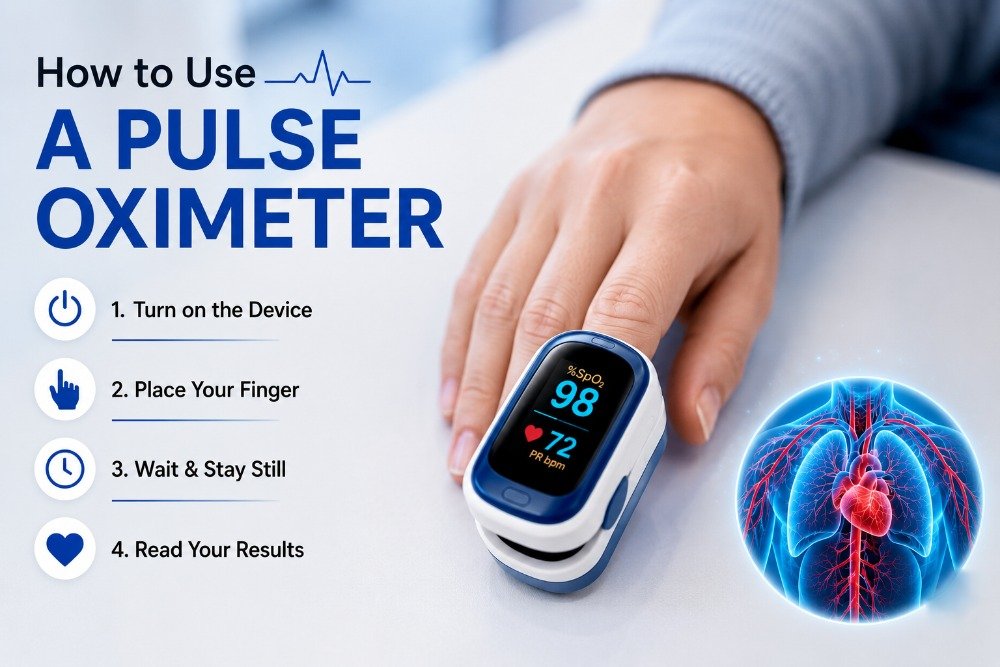
To use a pulse oximeter correctly, sit quietly for five minutes, place the device on a clean and warm fingertip, keep your hand still at heart level, and wait until the reading becomes stable. Most healthy adults have an oxygen saturation level between 95% and 100%, although normal ranges may vary depending on certain medical conditions. Learning how to use a pulse oximeter correctly is one of the easiest ways to monitor your oxygen level safely at home. A few simple steps can greatly improve the accuracy of every reading.
How to Use a Pulse Oximeter Correctly?
If you have ever wondered how to use a pulse oximeter correctly, you are not alone. Millions of people use this small device at home to monitor their oxygen levels, but many unknowingly make mistakes that can lead to inaccurate readings.
Whether you have asthma, COPD, heart disease, sleep apnea, or you simply want to keep an eye on your health, knowing how to use a pulse oximeter properly can help you make better decisions and understand when you may need medical attention. The good news is that using a pulse oximeter is simple.
With the correct technique, you can get reliable oxygen saturation readings within a few seconds. This guide explains every important step in clear, easy-to-follow language so anyone can use the device with confidence. Understanding how to use a pulse oximeter correctly helps you get more reliable oxygen readings and avoid unnecessary mistakes.
What Is a Pulse Oximeter?
A pulse oximeter is a small, portable medical device that measures the amount of oxygen carried in your blood. It also measures your heart rate at the same time. The device works by shining harmless light through your fingertip. It analyzes how much light passes through your blood vessels to estimate your oxygen saturation level, often shown as SpO₂ on the screen.
Because it provides quick results without needles or blood tests, a pulse oximeter has become one of the most commonly used home monitoring devices around the world. Healthcare professionals frequently recommend it for people who have:
- Asthma
- Chronic obstructive pulmonary disease (COPD)
- Pneumonia
- Sleep apnea
- Heart conditions
- COVID-19 recovery
- Other breathing disorders
Many healthy people also use it during exercise, travel to high altitudes, or while recovering from illness. Before checking your oxygen level, it is important to understand how to use a pulse oximeter the right way.
Why Learning How to Use a Pulse Oximeter Correctly Matters
Many people assume they can simply clip the device onto a finger and trust the first number that appears. Unfortunately, it is not always that simple. Several everyday factors can affect your results, including cold hands, nail polish, poor finger placement, body movement, and even bright lighting. These small mistakes may cause readings that are lower or higher than your actual oxygen level. Learning how to use a pulse oximeter correctly helps you:
- Get more accurate oxygen readings.
- Avoid unnecessary worry caused by incorrect results.
- Monitor long-term health conditions more effectively.
- Share reliable readings with your healthcare provider.
- Recognize when emergency medical care may be needed.
A pulse oximeter is a helpful monitoring tool, but it should never replace professional medical advice or emergency care when serious symptoms are present.
How Does a Pulse Oximeter Work?
Understanding how the device works makes it easier to understand why correct use is so important. Inside every fingertip pulse oximeter are two tiny light-emitting sensors. One emits red light, while the other emits infrared light.
When you place your finger inside the device, these lights pass through your fingertip. Oxygen-rich blood and oxygen-poor blood absorb light differently. The device measures these differences and instantly calculates your oxygen saturation level. The display usually shows two important values:
SpO₂
This is your blood oxygen saturation percentage.
Pulse Rate (PR)
This is your heart rate measured in beats per minute (BPM). Most healthy adults have an oxygen saturation level between 95% and 100%, although your healthcare provider may recommend different target levels if you have certain lung or heart conditions.
Related Guide: Congestive Heart Failure Symptoms: Early Signs, Causes & Prevention
Who Should Use a Pulse Oximeter?
Pulse oximeters are useful for many different people, not only those with serious medical conditions. You may benefit from using one if you:
- Have asthma or COPD.
- Live with chronic heart disease.
- Are recovering from pneumonia or COVID-19.
- Experience frequent shortness of breath.
- Have sleep apnea.
- Monitor oxygen levels during exercise or travel.
- Care for an older family member at home.
Many doctors also recommend home oxygen monitoring for patients who are recovering after hospitalization or surgery. However, even the best device is only helpful when you understand how to use a pulse oximeter correctly and interpret the results properly. The following instructions explain how to use a pulse oximeter safely and accurately at home.
Step-by-Step Guide: How to Use a Pulse Oximeter Correctly
Knowing how to use a pulse oximeter correctly can make a significant difference in the accuracy of your results. Even small mistakes, such as placing the device on a cold finger or moving your hand during the test, may produce readings that do not reflect your actual oxygen level. Follow these simple steps every time you check your oxygen saturation.
Step 1: Rest Before Taking a Reading
Do not use your pulse oximeter immediately after walking, climbing stairs, exercising, or doing household chores. Physical activity temporarily changes your heart rate and oxygen demand, which may affect your reading. For the most reliable result:
- Sit comfortably in a chair.
- Relax for at least 5 minutes.
- Breathe normally.
- Avoid talking during the test.
Taking a reading while your body is at rest provides a more accurate picture of your normal oxygen saturation.
Step 2: Warm Your Hands
Cold fingers reduce blood flow, making it harder for the pulse oximeter to detect your pulse accurately. If your hands feel cold:
- Rub them together for a few seconds.
- Wash them with warm water.
- Dry them completely before testing.
A warm fingertip usually produces a faster and more reliable reading.
Step 3: Remove Nail Polish or Artificial Nails
Dark-colored nail polish, gel nails, acrylic nails, or artificial nail tips may interfere with the light sensors inside the device. Whenever possible:
- Remove nail polish before testing.
- Avoid placing the device over artificial nails.
- Use a finger with a clean natural nail.
If removal is not possible, try another finger without polish.
Step 4: Choose the Correct Finger
Many people ask which finger gives the most accurate reading. In most cases, the middle finger or index finger provides the best results. However, different people may obtain slightly different readings depending on circulation. If one finger gives an unstable result, try another finger and compare the readings. Avoid fingers with:
- Cuts
- Bandages
- Swelling
- Poor circulation
- Excessive dirt or moisture
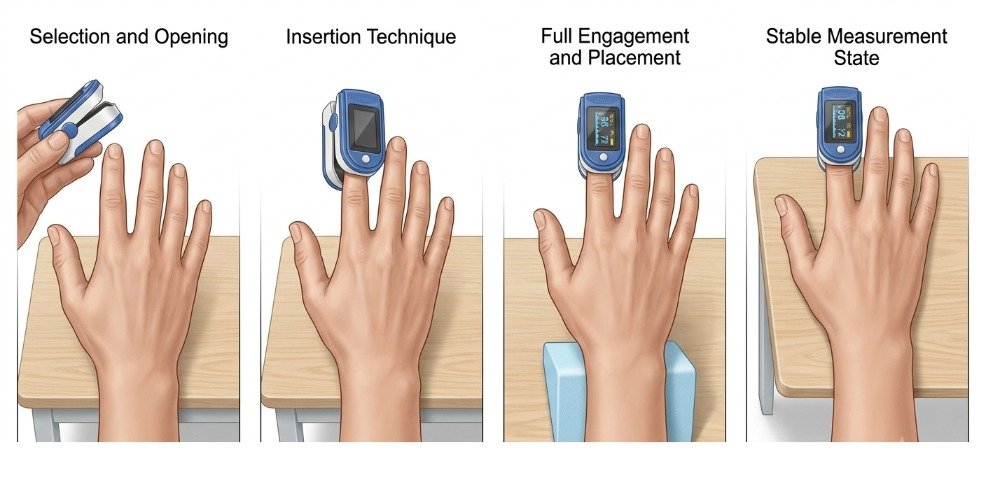
Step 5: Place the Pulse Oximeter Properly
Correct finger placement is one of the most important parts of how to use a pulse oximeter. Open the device and gently insert your finger until it reaches the end of the sensor. Your finger should fit naturally inside the clip. Do not squeeze the device tightly or force your finger into position. The light sensors must remain directly opposite each other for accurate measurements. Correct finger placement is one of the most important parts of how to use a pulse oximeter.
Step 6: Keep Your Hand Still
Movement is one of the most common reasons for inaccurate readings. While measuring:
- Rest your hand on a table or your lap.
- Keep your fingers relaxed.
- Avoid talking or moving.
- Do not shake your hand.
Keeping your hand still allows the pulse oximeter to detect a steady pulse signal.
Step 7: Wait Until the Reading Stabilizes
Do not rely on the first number that appears on the screen. Most devices need 10 to 30 seconds to produce a stable reading. Watch the display until the oxygen saturation and pulse rate stop changing. Only record the final stable result. Patience improves accuracy.
Step 8: Record Your Results
If you monitor your oxygen levels regularly, keeping a record can help you and your healthcare provider identify important changes over time. Write down:
- Date
- Time
- Oxygen saturation (SpO₂)
- Pulse rate
- Symptoms, if any
Tracking your readings makes it easier to notice patterns and discuss them during medical appointments.
Best Time to Check Your Oxygen Level
Many people wonder when they should use a pulse oximeter. The best time depends on why you are monitoring your oxygen saturation. For routine home monitoring, consider checking:
- In the morning before starting daily activities.
- While resting during the day.
- Before going to bed.
- Whenever you experience shortness of breath or chest discomfort.
- As recommended by your healthcare provider.
Always try to take readings under similar conditions each time so you can compare them more accurately.
Quick Tips for More Accurate Pulse Oximeter Readings
Use these simple habits every time you check your oxygen level.
✔ Sit quietly before testing.
✔ Keep your hand warm.
✔ Use a clean fingertip.
✔ Place the device correctly.
✔ Keep your hand still.
✔ Wait for a stable reading.
✔ Repeat the test if the result seems unusual.
These small steps can greatly improve the accuracy of your pulse oximeter.
Quick Reference Table: How to Use a Pulse Oximeter Correctly
| Step | What You Should Do | Why It Matters |
| Rest first | Sit quietly for 5 minutes | Reduces temporary changes in heart rate and oxygen levels |
| Warm your hands | Use warm, dry fingers | Improves blood flow for accurate readings |
| Remove nail polish | Use a natural nail if possible | Prevents light sensor interference |
| Choose the right finger. | Use the index or middle finger. | Often provides the strongest pulse signal. |
| Position correctly | Insert the finger fully into the device | Align the sensors properly |
| Stay still | Rest your hand on a flat surface | Prevents false readings caused by movement |
| Wait for stability | Allow 10–30 seconds | Ensures the displayed result is reliable |
| Record results | Note SpO₂, pulse, date, and symptoms | Helps monitor changes over time |
By following these steps, you can confidently understand how to use a pulse oximeter and obtain more consistent, reliable oxygen saturation readings at home.
Understanding Your Pulse Oximeter Readings
After learning how to use a pulse oximeter, the next step is understanding what the numbers actually mean. Many people panic after seeing a low reading or feel reassured by a normal number without considering their symptoms. A pulse oximeter is an excellent home monitoring tool, but it should always be interpreted correctly.
Knowing how to read your results helps you decide whether to continue monitoring at home, repeat the test, or contact a healthcare professional. Once you understand how to use a pulse oximeter, the next step is learning how to interpret the numbers correctly. Accurate readings are only useful when you know what they mean.
What Does SpO₂ Mean?
The main number displayed on your pulse oximeter is called SpO₂, which stands for peripheral oxygen saturation. It estimates the percentage of oxygen carried by your red blood cells.
A healthy body needs enough oxygen to allow every organ, muscle, and tissue to function properly. When oxygen levels drop, your body may not receive the oxygen it needs to work efficiently. Although a pulse oximeter gives a quick estimate, it does not replace a complete medical evaluation.
Normal Pulse Oximeter Reading Chart

Use the chart below as a general guide.
| SpO₂ Reading | What It Usually Means |
| 95%–100% | Normal oxygen level for most healthy adults |
| 92%–94% | Slightly lower than normal; monitor closely and repeat the test |
| Below 92% | Low oxygen level; contact your healthcare provider promptly |
| Below 90% | Medical emergency in many situations; seek immediate medical care |
People with chronic lung conditions such as COPD may have different target oxygen levels. Always follow the advice given by your healthcare provider.
Related Article: Hypertensive and Atherosclerotic Cardiovascular Disease: Symptoms, Causes & Treatment
What Is a Normal Pulse Rate?
Besides oxygen saturation, most pulse oximeters also display your pulse rate (PR). For most healthy adults at rest:
| Pulse Rate | General Range |
| 60–100 beats per minute | Normal resting pulse |
Several factors can temporarily change your pulse rate, including:
- Exercise
- Stress
- Anxiety
- Fever
- Certain medications
- Caffeine
A pulse oximeter measures your heart rate, but it cannot diagnose heart rhythm problems or heart disease on its own.
What Should You Do If Your Reading Is Low?
A single low reading does not always mean something is seriously wrong. Before becoming concerned:
- Stay calm.
- Check that you followed the correct steps.
- Warm your hands if they are cold.
- Sit quietly for five minutes.
- Repeat the measurement on another finger.
If your oxygen level remains low or continues to decrease, contact your healthcare provider. Never ignore symptoms simply because your pulse oximeter shows a normal number. Learning how to use a pulse oximeter properly makes it easier to monitor changes in your oxygen level over time.
When Should You Seek Emergency Medical Care?
A pulse oximeter is only one part of the picture. Seek immediate medical attention if you have:
- Severe shortness of breath
- Chest pain
- Blue lips or fingertips
- Confusion
- Difficulty staying awake
- Trouble speaking because of breathlessness
- Oxygen saturation below the level recommended by your doctor
Do not wait for repeated readings if your symptoms are severe.
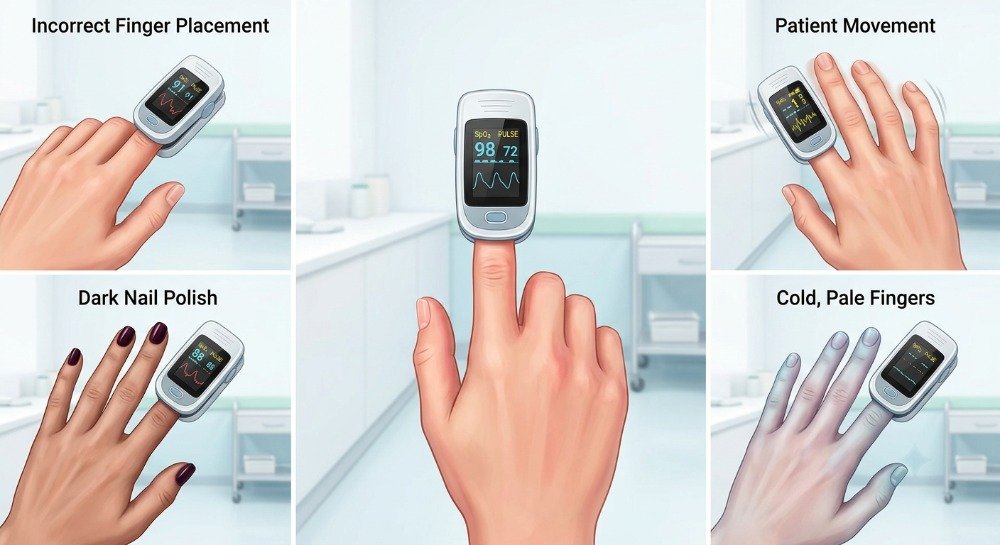
Why Your Pulse Oximeter May Show Incorrect Readings
Even after learning how to use a pulse oximeter, inaccurate readings can still happen. Understanding these causes helps you avoid unnecessary worry.
1. Cold Hands
Poor circulation caused by cold fingers reduces blood flow. This is one of the most common reasons for unusually low readings. Warm your hands before testing.
2. Nail Polish or Artificial Nails
Dark nail polish and artificial nails can interfere with the light sensors. Whenever possible, use a clean natural nail.
3. Body Movement
Moving your hand, talking, or shaking during the test can interrupt the sensor. Keep your hand completely still until the reading stabilizes.
4. Poor Finger Placement
If your finger is not fully inserted into the device, the sensors may not align correctly. Always place your finger as instructed by the manufacturer.
5. Bright Light
Strong sunlight or intense indoor lighting can sometimes affect the sensor. Take your reading indoors whenever possible.
6. Poor Circulation
Conditions that reduce blood flow may affect accuracy. Examples include:
- Low blood pressure
- Peripheral artery disease
- Raynaud’s phenomenon
In these situations, your healthcare provider may recommend additional testing.
Can Skin Tone Affect Pulse Oximeter Accuracy?
Recent studies have shown that some pulse oximeters may be slightly less accurate in people with darker skin tones, particularly when oxygen levels are already low. This does not mean the device is unreliable.
Instead, it means the reading should always be considered together with your symptoms. If you feel extremely short of breath, dizzy, or unwell, seek medical advice even if your pulse oximeter appears normal.
Can a Pulse Oximeter Detect Every Breathing Problem?
No. A pulse oximeter measures oxygen saturation and pulse rate only. It cannot diagnose:
- Asthma
- COPD
- Pneumonia
- Heart disease
- Sleep apnea
- Blood clots
- Lung infections
These conditions require a proper medical examination and additional tests. Use your pulse oximeter as a monitoring tool, not as a replacement for professional healthcare.
Common Reading Mistakes and How to Fix Them
Even if you know how to use a pulse oximeter, these common mistakes can still affect your results.
| Common Mistake | Better Practice |
| Taking a reading immediately after exercise | Rest for at least five minutes. |
| Using cold fingers | Warm your hands first. |
| Wearing dark nail polish | Use a clean natural nail. |
| Moving during the test | Keep your hand completely still |
| Reading the first number | Wait until the display becomes stable |
| Ignoring symptoms because the reading looks normal | Always consider how you feel, not just the number |
How Often Should You Check Your Oxygen Level?
Most healthy people do not need to check their oxygen level every day. Your healthcare provider may recommend regular monitoring if you have:
- COPD
- Asthma
- Heart failure
- COVID-19 recovery
- Home oxygen therapy
- Other chronic lung conditions
If you are monitoring your oxygen at home, try to measure it under the same conditions each time for more consistent results.
Expert Tips for Accurate Pulse Oximeter Readings
Learning how to use a pulse oximeter is only the first step. To get the most accurate results every time, you should also know how to care for the device, when to trust the readings, and when to seek professional medical advice. These simple habits can help you use your pulse oximeter more effectively and avoid unnecessary errors.
How to Get the Most Accurate Pulse Oximeter Reading?
Even high-quality pulse oximeters can produce inaccurate results if they are not used correctly. Keep these practical tips in mind every time you measure your oxygen level.
1. Always Rest Before Testing
Sit quietly for at least five minutes before taking a reading. Testing immediately after walking, exercising, or climbing stairs may temporarily change your pulse and oxygen saturation.
2. Use Warm, Clean Fingers
Warm fingers improve blood circulation and help the sensors detect your pulse more accurately. Wash and dry your hands before testing.
3. Hold Your Hand at Heart Level
Rest your hand comfortably on a table or your lap. Keeping your hand steady at about heart level helps reduce unnecessary movement and improves reading consistency.
4. Stay Still Until the Reading Stabilizes
Avoid talking, moving, or checking the screen every second. Wait until both your oxygen saturation and pulse rate stop changing before recording the result.
5. Use the Same Finger Each Time
If you monitor your oxygen levels regularly, using the same finger under similar conditions makes it easier to compare readings over time. Consistency matters.
How to Clean Your Pulse Oximeter?
Keeping your device clean helps maintain accurate readings and reduces the spread of germs. After each use:
- Turn the device off.
- Wipe the sensor area with a soft cloth.
- Use a disinfectant wipe or 70% isopropyl alcohol if recommended by the manufacturer.
- Allow the device to dry completely before storing it.
Do not pour liquids directly onto the pulse oximeter or immerse it in water.
How to Store Your Pulse Oximeter?
Proper storage helps extend the life of your device. Store it:
- In a cool, dry place.
- Away from direct sunlight.
- Away from excessive heat or moisture.
- Inside its protective case if available.
If you do not plan to use it for several weeks, remove the batteries to prevent damage from battery leakage.
How Often Should You Replace the Batteries?
Weak batteries may affect the performance of some pulse oximeters. Replace the batteries when:
- The battery indicator appears.
- The screen becomes dim.
- The device turns off unexpectedly.
- Readings become unstable despite correct use.
Fresh batteries help ensure reliable performance.
Can You Trust Home Pulse Oximeters?
Most FDA-cleared or medically approved pulse oximeters provide reliable readings when used correctly. However, no home device is perfect. A pulse oximeter should always be used together with your symptoms and your healthcare provider’s advice. If the reading seems unusual:
- Repeat the measurement.
- Check another finger.
- Make sure you followed the correct steps.
- Contact your healthcare provider if you remain concerned.
Frequently Asked Questions
How often should I use a pulse oximeter at home?
If your healthcare provider recommends regular monitoring, knowing how to use a pulse oximeter correctly every time helps produce more consistent readings.
Can I use a pulse oximeter on any finger?
Yes, but following the correct steps for how to use a pulse oximeter usually provides the most accurate results.
Why is my pulse oximeter reading different every time?
Small changes in finger position or movement can affect results, even if you already know how to use a pulse oximeter.
Which Finger Gives the Most Accurate Pulse Oximeter Reading?
For most people, the middle finger or index finger provides the most reliable reading. If one finger gives inconsistent results, try another finger and compare the readings.
Can I Use a Pulse Oximeter Every Day?
Yes. People with chronic lung or heart conditions may use a pulse oximeter daily if recommended by their healthcare provider. Healthy individuals usually do not need routine daily monitoring.
Can Nail Polish Affect Pulse Oximeter Readings?
Yes. Dark nail polish, gel nails, and artificial nails may interfere with the light sensors and produce inaccurate readings. Whenever possible, use a clean natural nail.
What Is Considered a Dangerous Oxygen Level?
For most healthy adults, oxygen saturation below 90% is considered a medical emergency. People with chronic lung diseases may have different target ranges. Always follow your healthcare provider’s recommendations.
Can Anxiety Lower Oxygen Levels?
Anxiety itself usually does not lower oxygen saturation. However, anxiety may increase your breathing rate and make you feel short of breath. If symptoms continue or worsen, seek medical advice instead of relying only on your pulse oximeter.
Can a Pulse Oximeter Detect Heart Problems?
No. A pulse oximeter measures oxygen saturation and pulse rate only. It cannot diagnose heart disease, irregular heart rhythms, or heart attacks.
Should I Check My Oxygen Level While Sleeping?
Unless your healthcare provider specifically recommends overnight monitoring, most people do not need to use a pulse oximeter during sleep. People with sleep apnea or certain lung conditions may require specialized overnight monitoring.
Can Smoking Affect Pulse Oximeter Results?
Smoking may reduce oxygen delivery to your body over time. Carbon monoxide exposure can also affect oxygen measurements. If you smoke regularly, discuss your oxygen readings with your healthcare provider.
Key Takeaways
If you remember only a few things about how to use a pulse oximeter, remember these:
- Rest before taking a reading.
- Keep your hands warm and still.
- Use the device on a clean fingertip.
- Wait for the numbers to stabilize.
- Record your readings consistently.
- Never ignore serious symptoms, even if the reading appears normal.
- Contact your healthcare provider if your oxygen level remains lower than recommended.
These expert recommendations will help you improve how to use a pulse oximeter during daily home monitoring.
Conclusion
Understanding how to use a pulse oximeter correctly helps you get accurate oxygen saturation readings and make better decisions about your health. A pulse oximeter is one of the easiest medical devices to use at home, but correct technique makes all the difference. Small details such as proper finger placement, warm hands, and remaining still during the test can significantly improve accuracy.
Remember that a pulse oximeter is a monitoring tool, not a substitute for professional medical care. If you experience persistent shortness of breath, chest pain, confusion, or oxygen levels that remain below your healthcare provider’s recommended range, seek medical attention immediately.
Used correctly, a pulse oximeter can become a valuable part of your home health routine, helping you monitor oxygen levels with greater confidence while supporting informed conversations with your healthcare provider. Knowing how to use a pulse oximeter correctly is one of the easiest ways to monitor your oxygen level safely at home.