

What is the best healthy diet plan for gestational diabetes?
A healthy diet plan for gestational diabetes focuses on balanced meals that help keep blood sugar within a healthy range during pregnancy. It includes whole grains, lean protein, healthy fats, vegetables, fruits in appropriate portions, and high-fiber foods while limiting sugary drinks, refined carbohydrates, and highly processed foods. Eating smaller meals throughout the day and monitoring carbohydrate intake are also important parts of managing gestational diabetes.
Gestational Diabetes Doesn’t Mean You Can’t Eat Well
Hearing that you have gestational diabetes can feel overwhelming. Many women immediately wonder if they have to stop eating their favorite foods or follow a strict diet for the rest of their pregnancy. The good news is that most women can still enjoy a wide variety of foods. The key is choosing balanced meals that help keep blood sugar steady throughout the day.
A healthy diet plan for gestational diabetes is not about starving yourself or eating boring meals. It is about making smarter food choices that support both you and your growing baby. With the right eating plan, many women successfully manage gestational diabetes and have healthy pregnancies.
What Is Gestational Diabetes?
Gestational diabetes is a type of diabetes that develops during pregnancy. It happens when pregnancy hormones make it harder for your body to use insulin effectively. As a result, blood sugar levels become higher than normal. Unlike type 1 or type 2 diabetes, gestational diabetes usually appears during the second or third trimester.
For many women, blood sugar returns to normal after delivery. However, having gestational diabetes increases the risk of developing type 2 diabetes later in life. Because blood sugar directly affects both mother and baby, managing it carefully during pregnancy is extremely important. A healthy diet plan for gestational diabetes can help you make safer food choices while supporting a healthy pregnancy and more stable blood sugar levels.
Why Diet Is the First Line of Treatment
Following a healthy diet plan for gestational diabetes every day is one of the most effective ways to support healthy blood sugar during pregnancy. For many women, healthy eating is the first and most effective step in controlling gestational diabetes. Food has the biggest influence on blood sugar after meals. Choosing the right foods and eating them in the right portions can help prevent large spikes in glucose levels.
A well-planned healthy diet plan for gestational diabetes may also help reduce the need for insulin or other diabetes medications in some pregnancies. However, every pregnancy is different, so always follow your healthcare provider’s recommendations. Healthy eating works best when combined with regular blood sugar monitoring, light physical activity if approved by your doctor, and routine prenatal care.
Why Managing Blood Sugar During Pregnancy Matters
Keeping blood sugar within your target range helps protect both mother and baby. When blood sugar stays too high for long periods, it may increase the risk of pregnancy complications. Poorly managed gestational diabetes may increase the chances of:
- A larger-than-average baby (macrosomia)
- Difficult delivery
- Cesarean birth
- Premature delivery
- Low blood sugar in the baby after birth
- High blood pressure during pregnancy
The good news is that proper nutrition and healthy lifestyle habits can significantly lower many of these risks.
How Food Affects Blood Sugar
Every time you eat carbohydrates, your body breaks them down into glucose. Glucose enters the bloodstream and raises blood sugar levels. Insulin then helps move that glucose into your cells, where it is used for energy.
During pregnancy, hormones can reduce how well insulin works. This condition is called insulin resistance. That is why choosing the right type of carbohydrates becomes so important.
A healthy diet plan for gestational diabetes focuses on carbohydrates that digest more slowly. These foods help keep blood sugar more stable after meals instead of causing sudden spikes.
Goals of a Healthy Diet Plan for Gestational Diabetes
The purpose of a gestational diabetes diet is not simply to lower blood sugar. It also supports a healthy pregnancy while providing enough nutrients for your baby’s growth. A good eating plan should help you:
- Keep blood sugar within your target range.
- Support healthy fetal growth.
- Provide enough vitamins and minerals.
- Reduce excessive pregnancy weight gain.
- Maintain steady energy levels.
- Lower the risk of pregnancy complications.
Healthy eating during pregnancy is about balance rather than restriction. Every healthy diet plan for gestational diabetes should be personalized to meet both your nutritional needs and your blood sugar goals.
Key Principles of a Healthy Diet Plan for Gestational Diabetes
Most healthcare providers recommend following several basic nutrition principles. These include:
- Eating regular meals instead of skipping them.
- Choosing high-fiber carbohydrates.
- Including lean protein with every meal.
- Eating healthy fats in moderation.
- Filling half your plate with non-starchy vegetables.
- Drinking plenty of water.
- Limiting foods high in added sugar.
These habits work together to support healthier blood sugar throughout the day.
What Nutrients Matter Most?
Instead of focusing on only one food, think about the nutrients your body needs every day.
Fiber
Fiber slows digestion and helps prevent rapid increases in blood sugar. Good sources include:
- Oats
- Beans
- Lentils
- Vegetables
- Whole grains
Protein
Protein helps you stay full longer and supports your baby’s growth. Healthy sources include:
- Chicken
- Turkey
- Fish that are safe during pregnancy
- Eggs
- Greek yogurt
- Cottage cheese
- Tofu
- Beans
Healthy Fats
Healthy fats support your baby’s brain development and help make meals more satisfying. Choose foods like:
- Avocados
- Olive oil
- Nuts
- Seeds
Complex Carbohydrates
Carbohydrates are not the enemy. Your body and your baby both need them. The goal is to choose carbohydrates that digest slowly. Examples include:
- Brown rice
- Quinoa
- Whole wheat bread
- Sweet potatoes
- Oats
These foods generally have less effect on blood sugar than refined carbohydrates.
Can You Still Eat Carbohydrates?
Yes. One of the biggest myths about gestational diabetes is that you must avoid carbohydrates completely. That is not true. Carbohydrates are an important source of energy during pregnancy.
Instead of eliminating them, learn how to choose healthier carbohydrate sources and eat appropriate portions. Pairing carbohydrates with protein and healthy fats can also help reduce blood sugar spikes after meals.
Why Portion Size Is Just as Important
Even healthy foods can raise blood sugar if eaten in very large amounts. Learning portion control is one of the most valuable skills during pregnancy. For example:
- A moderate serving of brown rice fits well into a balanced meal.
- A very large serving may cause blood sugar to rise too much.
This is why many healthcare providers recommend spreading carbohydrates evenly throughout the day instead of eating most of them in one meal.
Related Guide: Heart Healthy Diet for High Blood Pressure
Best Foods to Eat with Gestational Diabetes
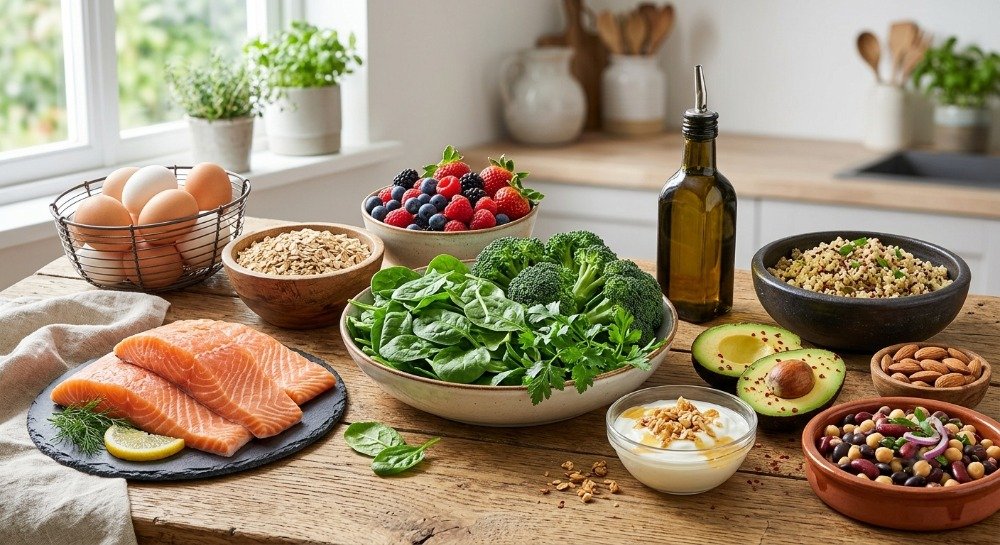
A healthy diet plan for gestational diabetes is built around foods that provide steady energy and help prevent sudden blood sugar spikes. The goal isn’t to remove carbohydrates completely. Instead, it’s to choose healthier sources and balance them with protein, healthy fats, and fiber. Here are the foods that deserve a place in your daily meals. Building a healthy diet plan for gestational diabetes starts with choosing nutrient-rich foods that release energy slowly.
1. Non-Starchy Vegetables
Vegetables should be the largest part of most meals. They are naturally low in calories and carbohydrates while providing vitamins, minerals, fiber, and antioxidants. Fiber also slows digestion, helping blood sugar rise more gradually after eating. Aim to fill half of your plate with non-starchy vegetables whenever possible. Good choices include:
- Spinach
- Broccoli
- Cauliflower
- Cucumber
- Bell peppers
- Zucchini
- Green beans
- Mushrooms
- Lettuce
- Cabbage
- Asparagus
Fresh and frozen vegetables are both excellent choices. If using canned vegetables, choose low-sodium varieties whenever possible.
2. High-Fiber Whole Grains
Whole grains provide carbohydrates your body needs, but they digest more slowly than refined grains. Because they contain more fiber, they usually cause a slower rise in blood sugar. Healthy whole-grain options include:
- Oatmeal
- Brown rice
- Quinoa
- Barley
- Whole wheat pasta
- Whole grain bread
- Whole grain tortillas
Pay attention to portion sizes. Even healthy grains should be eaten in moderation as part of a balanced gestational diabetes meal plan.
3. Lean Protein
Protein plays an important role in every meal. It helps you stay full longer and slows the absorption of carbohydrates. This combination can help reduce blood sugar spikes after eating. Good protein choices include:
- Skinless chicken
- Turkey
- Eggs
- Fish that are safe during pregnancy
- Lean beef
- Tofu
- Tempeh
- Cottage cheese
- Greek yogurt
- Beans
- Lentils
Try to include a source of lean protein at every meal and snack. Lean protein is an essential part of every healthy diet plan for gestational diabetes because it helps balance meals and supports your baby’s growth.
4. Healthy Fats
Healthy fats support your baby’s growth while making meals more satisfying. Unlike refined carbohydrates, healthy fats have very little direct effect on blood sugar. Choose foods like:
- Avocados
- Olive oil
- Almonds
- Walnuts
- Pistachios
- Chia seeds
- Flaxseeds
- Natural peanut butter
Because fats are calorie-dense, moderate portions are still important. Healthy fats make a healthy diet plan for gestational diabetes more satisfying while providing important nutrients during pregnancy.
5. Low-Glycemic Fruits
Fruit contains natural sugar, but that doesn’t mean you need to avoid it. Many fruits are rich in fiber, vitamins, and antioxidants. The key is choosing appropriate portions and spreading fruit throughout the day instead of eating several servings at once. Good options include:
- Apples
- Pears
- Berries
- Oranges
- Kiwi
- Peaches
- Plums
Pair fruit with protein, such as Greek yogurt or a handful of nuts, to help reduce blood sugar spikes.
6. Low-Fat Dairy
Milk and dairy products provide calcium, protein, and vitamin D, all of which are important during pregnancy. Choose options such as:
- Plain Greek yogurt
- Low-fat milk
- Cottage cheese
- Low-fat cheese
Avoid flavored yogurts with added sugar whenever possible.
7. Beans and Lentils
Beans and lentils offer one of the best combinations of protein and fiber. They digest slowly and can help support more stable blood sugar levels. Healthy choices include:
- Black beans
- Kidney beans
- Chickpeas
- Lentils
- Pinto beans
These foods also make excellent meat alternatives.
Foods to Limit or Avoid
You don’t have to eliminate every favorite food, but some foods are more likely to cause rapid blood sugar spikes. Try to limit:
- Sugary soft drinks
- Sweet tea
- Fruit juice
- Candy
- Cakes
- Cookies
- Pastries
- Sweet breakfast cereals
- White bread
- White rice
- Chips
- Fast food
- Highly processed snacks
These foods provide plenty of calories but very little nutritional value. Limiting these foods makes it easier to follow a healthy diet plan for gestational diabetes and keep blood sugar within your target range.
Best Breakfast Ideas for Gestational Diabetes
Breakfast is often the most challenging meal because blood sugar tends to be higher in the morning. A balanced breakfast should combine protein, fiber, and healthy carbohydrates. Healthy ideas include:
- Oatmeal with walnuts and berries
- Greek yogurt with chia seeds
- Whole grain toast with peanut butter
- Vegetable omelet with whole grain toast
- Cottage cheese with sliced pear
Avoid sugary cereals, pastries, and sweet coffee drinks.
Healthy Lunch Ideas
Lunch should keep you satisfied without causing a large rise in blood sugar. Try:
- Grilled chicken salad
- Turkey sandwich on whole grain bread
- Brown rice with grilled chicken and vegetables
- Lentil soup with whole grain crackers
- Tuna salad with mixed greens
Include vegetables with every lunch whenever possible.
Healthy Dinner Ideas
Dinner should be balanced and easy to digest. Good choices include:
- Baked salmon with broccoli and quinoa
- Grilled chicken with roasted vegetables
- Lean beef stir-fry with brown rice
- Turkey meatballs with whole wheat pasta
- Vegetable chili with beans
Avoid oversized portions late in the evening.
Healthy Snacks Between Meals
Many healthcare providers recommend eating small snacks between meals. Healthy snacks may help keep blood sugar steady throughout the day. Good snack ideas include:
- Apple slices with peanut butter
- Greek yogurt
- Cheese and whole grain crackers
- Handful of almonds
- Carrot sticks with hummus
- Cottage cheese with berries
- Boiled eggs
- Celery with natural peanut butter
Choose snacks that combine protein with healthy carbohydrates. Healthy snacks play an important role in a healthy diet plan for gestational diabetes, especially between larger meals.
Drinks That Support Healthy Blood Sugar
Water should be your primary drink during pregnancy. Other good options include:
- Sparkling water without sugar
- Unsweetened herbal tea (approved by your healthcare provider)
- Low-fat milk
- Plain water with lemon
Avoid:
- Soda
- Energy drinks
- Sweetened coffee beverages
- Sweet fruit juices
These drinks can quickly raise blood sugar.
Easy Food Swaps
Small changes can make a big difference. Instead of:
- White bread → Whole grain bread
- White rice → Brown rice or quinoa
- Sugary cereal → Oatmeal
- Potato chips → Unsalted nuts
- Ice cream → Plain Greek yogurt with berries
- Soda → Water with lemon
These simple swaps support a healthy diet plan for gestational diabetes without making meals feel restrictive.
Grocery Shopping Tips
Smart grocery shopping makes following a healthy diet plan for gestational diabetes much easier throughout pregnancy. Planning ahead makes healthy eating much easier. When shopping:
- Buy fresh vegetables first.
- Choose whole grains over refined grains.
- Pick lean proteins.
- Read nutrition labels carefully.
- Compare added sugar.
- Look for higher-fiber products.
- Avoid buying sugary snacks “just in case.”
Shopping with a list can help reduce impulse purchases.
Sample One-Day Healthy Diet Plan for Gestational Diabetes
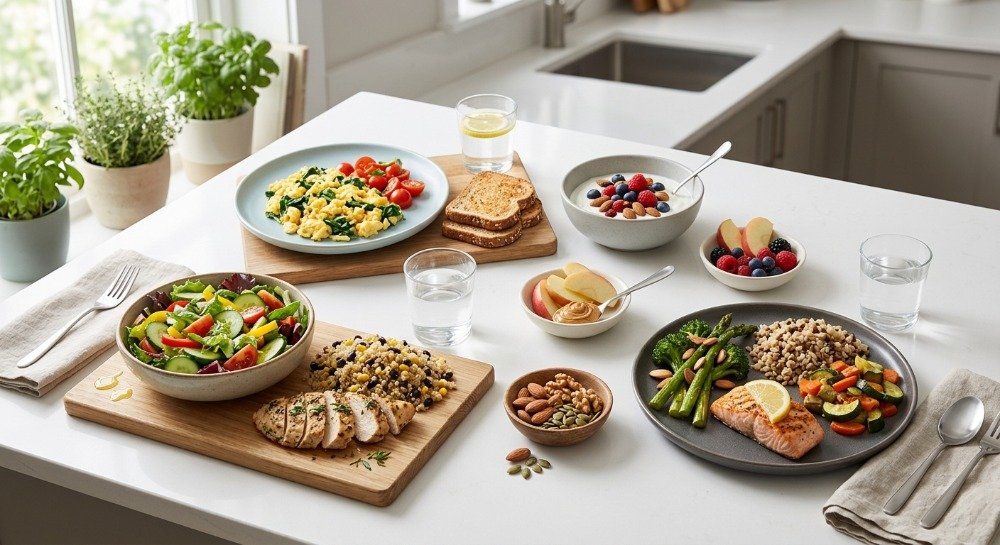
Many women find meal planning easier when they can see a real example. The sample below shows how a healthy diet plan for gestational diabetes can include balanced meals throughout the day. Remember that your calorie and carbohydrate needs may differ depending on your pregnancy, activity level, and your healthcare provider’s advice. This sample healthy diet plan for gestational diabetes shows how balanced meals can fit into your daily routine.
| Meal | Example |
| Breakfast | Vegetable omelet with one slice of whole-grain toast and a small apple |
| Morning Snack | Plain Greek yogurt with a few blueberries |
| Lunch | Grilled chicken breast, brown rice, mixed salad, and olive oil dressing |
| Afternoon Snack | A handful of almonds with cucumber slices |
| Dinner | Baked salmon, roasted broccoli, and quinoa |
| Evening Snack | Cottage cheese with a few sliced strawberries |
This meal plan provides protein, fiber, healthy fats, and complex carbohydrates while helping reduce large blood sugar swings.
Portion Control Matters
Eating healthy foods is only part of the plan. Portion size also affects blood sugar. Even nutritious foods can cause blood sugar to rise if you eat too much at one time. A simple method is the Healthy Plate Method. Fill your plate like this:
- Half with non-starchy vegetables
- One-quarter with lean protein
- One-quarter with whole grains or other healthy carbohydrates
This simple approach helps create balanced meals without counting every calorie. Portion control is one of the foundations of a successful healthy diet plan for gestational diabetes.
Should You Count Carbohydrates?
Many women with gestational diabetes are advised to monitor carbohydrate intake. Carbohydrates are still an important source of energy during pregnancy. The goal is not to eliminate them but to spread them evenly throughout the day.
Large amounts of carbohydrates eaten in one meal are more likely to increase blood sugar. Your healthcare provider or registered dietitian can recommend the carbohydrate amount that is right for your pregnancy.
Eating Out with Gestational Diabetes
You can still enjoy restaurant meals while following a healthy diet plan for gestational diabetes. A little planning makes a big difference. Helpful tips include:
- Choose grilled, baked, or roasted foods.
- Ask for sauces on the side.
- Replace fries with vegetables or salad.
- Choose water instead of sugary drinks.
- Avoid oversized portions.
- Share desserts if you want a small treat.
Simple choices can help you enjoy meals without losing control of your blood sugar.
Common Mistakes to Avoid
Even the best healthy diet plan for gestational diabetes can become less effective if common mistakes are ignored. Many women accidentally make small mistakes that affect blood sugar. Try to avoid these habits:
Skipping meals
Going too long without eating can make blood sugar harder to manage later.
Drinking sugary beverages
Soft drinks, sweet tea, and fruit juice can raise blood sugar quickly.
Eating too many carbohydrates at once
Large servings of rice, pasta, bread, or potatoes may increase blood sugar more than smaller portions spread throughout the day.
Ignoring healthy snacks
Small, balanced snacks between meals may help keep blood sugar more stable.
Forgetting protein
Protein helps slow digestion and works well with healthy carbohydrates.

Healthy Lifestyle Tips That Support Your Diet
Healthy eating works even better when combined with other positive habits. Consider these simple lifestyle changes:
- Walk after meals if your healthcare provider approves.
- Stay hydrated throughout the day.
- Get enough sleep.
- Attend all prenatal appointments.
- Monitor your blood sugar as instructed.
- Manage stress with gentle activities like stretching or deep breathing.
Small daily habits often have a meaningful impact over time.
Myth vs. Fact
Myth:
People with gestational diabetes cannot eat fruit.
Fact:
Fruit can be part of a healthy diet. Portion size and choosing high-fiber fruits matter most.
Myth:
You must completely avoid carbohydrates.
Fact:
Healthy carbohydrates provide important nutrients during pregnancy. The focus is on quality and portion control.
Myth:
Gestational diabetes always requires insulin.
Fact:
Many women successfully manage gestational diabetes through healthy eating, physical activity, and regular blood sugar monitoring. Some pregnancies may still require medication if lifestyle changes alone are not enough.
Myth:
Gestational diabetes disappears after delivery, so it doesn’t matter.
Fact:
Blood sugar often returns to normal after birth, but women who develop gestational diabetes have a higher risk of developing type 2 diabetes later in life. Healthy eating remains important after pregnancy.
When to Contact Your Healthcare Provider
A healthy diet can help manage gestational diabetes, but it should never replace medical care. Contact your healthcare provider if:
- Your blood sugar remains above your target range.
- You notice frequent episodes of very low blood sugar.
- You have severe nausea or vomiting that prevents eating.
- You experience reduced fetal movement.
- You develop severe swelling, vision changes, or persistent headaches.
- You have concerns about your meal plan or blood sugar readings.
Never change prescribed medications without speaking with your healthcare team.
Frequently Asked Questions
Can I eat rice if I have gestational diabetes?
Yes. Brown rice and other whole grains are generally better choices than white rice. Keep portions moderate and pair rice with lean protein and vegetables.
Is fruit safe during gestational diabetes?
Yes. Most fruits can fit into a balanced eating plan. High-fiber fruits such as apples, berries, pears, and oranges are often good choices when eaten in appropriate portions.
Can I eat sweets occasionally?
Occasional treats may fit into your meal plan if approved by your healthcare provider. However, foods high in added sugar should not become a regular part of your diet.
Is breakfast important?
Yes. A balanced breakfast helps provide steady energy and may help prevent large blood sugar fluctuations later in the day.
How many meals should I eat?
Many healthcare providers recommend three balanced meals with two or three healthy snacks throughout the day. Your exact eating schedule should follow your healthcare provider’s recommendations.
Can exercise help alongside a healthy diet?
Yes. Light to moderate physical activity approved by your healthcare provider may improve insulin sensitivity and support healthier blood sugar levels during pregnancy.
Conclusion
Following a healthy diet plan for gestational diabetes is one of the most effective ways to support a healthy pregnancy. It is not about avoiding every carbohydrate or following a restrictive diet. Instead, it is about choosing nutritious foods, controlling portions, eating balanced meals, and building healthy habits you can maintain every day.
Focus on filling your plate with vegetables, lean proteins, healthy fats, whole grains, and high-fiber foods while limiting added sugars and highly processed meals. Small, consistent choices often have the greatest impact on blood sugar management. Remember that a healthy diet plan for gestational diabetes works best when combined with regular prenatal care, blood sugar monitoring, and healthy lifestyle habits.
Every pregnancy is different, so work closely with your healthcare provider or registered dietitian to create a meal plan that meets your individual needs. With proper nutrition, regular monitoring, and ongoing prenatal care, many women successfully manage gestational diabetes and go on to have healthy pregnancies and healthy babies.