
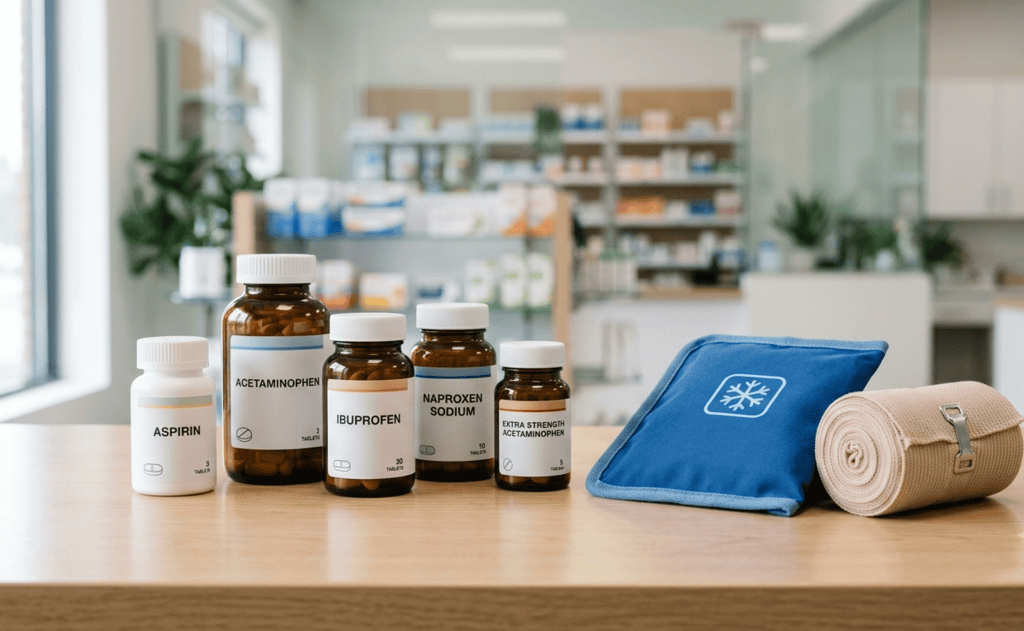
Swelling can happen for many reasons, from a minor ankle sprain to an insect bite or joint inflammation. While mild swelling often improves with rest, some cases need treatment to reduce discomfort and help you return to your normal routine. Choosing the right over the counter medication for swelling can provide temporary relief and support the body’s natural healing process.
Introduction
Swelling is one of the body’s natural responses to injury, irritation, or infection. It develops when extra fluid collects in the body’s tissues, causing the affected area to become larger, tender, or uncomfortable. Although mild swelling often goes away on its own, persistent or painful swelling may interfere with daily activities and require treatment.
Numerous over-the-counter (OTC) medications, including those that treat muscle strains, joint pain, minor injuries, arthritis, and inflammation, are available. However, not all medications function in the same way, and choosing the wrong one may not be as helpful or lead to undesirable side effects.
This guide explains what over the counter medication helps with swelling, how these medicines work, when they should be used, possible side effects, and practical safety tips to help you make informed decisions. You will also learn when swelling may require professional medical attention instead of self-treatment.
What over the counter medication helps with swelling?
The best over the counter medication for swelling depends on the underlying cause. Nonsteroidal anti-inflammatory drugs (NSAIDs), such as ibuprofen and naproxen sodium, are commonly used because they help reduce both swelling and pain. For minor injuries, combining medication with rest, ice, compression, and elevation (RICE) may improve recovery. If swelling is severe, unexplained, or lasts for several days, medical evaluation is recommended.
What Is Swelling?
Swelling, also known as edema in some situations, occurs when excess fluid builds up in the body’s tissues. It may affect a small area, such as a finger or ankle, or involve larger parts of the body depending on the underlying cause.
Swelling itself is not a disease. Instead, it is a symptom that signals the body is responding to an injury, inflammation, allergic reaction, infection, or another medical condition. While temporary swelling is common and usually harmless, swelling that becomes severe or does not improve should not be ignored.
Common signs of swelling include:
- Puffiness around the affected area
- Tight or stretched skin
- Mild pain or tenderness
- Warmth or redness
- Reduced movement around joints
- Visible enlargement of the affected body part
Understanding what is causing the swelling is the first step toward choosing the most appropriate treatment. Choosing the right over the counter medication for swelling depends on identifying the underlying cause rather than treating the symptom alone.
Common Causes of Swelling
Many different conditions can lead to swelling. Identifying the cause helps determine whether home treatment is appropriate or if medical care is needed.
Some of the most common causes include:
- Minor sprains and strains
- Sports injuries
- Arthritis
- Muscle overuse
- Insect bites and stings
- Allergic reactions
- Minor burns
- Joint inflammation
- Tendon injuries
- Recovery after minor surgical procedures
- Certain medications
- Standing or sitting for long periods
In many everyday situations, an over the counter medication for swelling may help reduce discomfort while the body heals naturally.
When Does Swelling Need Treatment?
Not every swollen area requires medication. Mild swelling often improves within a few days by following simple self-care measures such as resting the affected area, applying ice, and keeping the limb elevated.
However, treatment may be helpful when swelling:
- Causes ongoing pain or discomfort
- Limits movement
- Persists for several days
- Occurs after a minor injury
- Interferes with work, exercise, or daily activities
If swelling develops suddenly without an obvious cause, spreads quickly, affects the face or throat, or is accompanied by difficulty breathing, chest pain, fever, or severe pain, seek immediate medical attention instead of relying on over-the-counter medications.
Best Over the Counter Medications for Swelling
Choosing the right over the counter medication for swelling depends on what is causing the swelling. Some medicines help reduce inflammation, while others mainly relieve pain without affecting swelling itself. Understanding these differences can help you select the most appropriate option for your symptoms.
Below are some of the most commonly used OTC medications for mild to moderate swelling.
1. Ibuprofen (Advil, Motrin IB)
Ibuprofen is one of the most widely recommended over-the-counter medicines for swelling. It belongs to a group of medications called nonsteroidal anti-inflammatory drugs (NSAIDs), which reduce inflammation while also relieving pain and lowering fever.
It is commonly used for swollen joints, muscle injuries, sports injuries, arthritis, dental pain, and minor sprains.
Key Features
- Helps reduce swelling and inflammation
- Provides pain relief
- Available in tablets, capsules, and liquid forms
- Suitable for short-term use when taken as directed
Pros
- Reduces both pain and swelling
- Fast-acting for many common injuries
- Widely available without a prescription
Cons
- May irritate the stomach
- Not suitable for everyone with kidney disease or stomach ulcers
- Should not be used longer than recommended without medical advice
Best For
People with mild to moderate swelling caused by muscle strains, joint pain, arthritis, or minor injuries.
2. Naproxen Sodium (Aleve)
Naproxen sodium is another NSAID that helps reduce swelling and provides longer lasting pain relief than many other OTC options. Because it works for an extended period, some people prefer it for ongoing discomfort.
It is often used for arthritis, tendon pain, back pain, and sports-related injuries.
Key Features
- Long lasting anti-inflammatory effect
- Helps relieve pain and swelling
- Usually requires fewer daily doses
- Available without a prescription
Pros
- Longer duration of action
- Effective for joint and muscle pain
- Convenient dosing schedule
Cons
- May cause stomach irritation
- Not recommended for certain heart or kidney conditions
- Should be used only as directed
Best For
Adults looking for longer-lasting relief from swelling associated with arthritis or musculoskeletal injuries.
3. Aspirin
Aspirin has anti-inflammatory properties and may help reduce swelling in some situations. However, it is used less often today for this purpose because other NSAIDs generally provide better relief with fewer side effects for many people.
Key Features
- Reduces inflammation and pain
- Also used in low doses for certain heart conditions under medical supervision
- Available in several strengths
Pros
- Helps reduce mild inflammation
- Readily available
- Affordable option
Cons
- Higher risk of stomach irritation and bleeding
- Not suitable for children with viral illnesses
- May interact with blood-thinning medications
Best For
Adults who have been advised by a healthcare professional that aspirin is appropriate for their condition.
4. Topical Diclofenac Gel (Voltaren Arthritis Pain Gel)
Unlike oral medications, diclofenac gel is applied directly to the affected area. It delivers anti-inflammatory medicine to painful joints with less medication entering the bloodstream.
It is commonly used for arthritis affecting the hands, knees, feet, and other joints close to the skin.
Key Features
- Applied directly to the painful area
- Helps reduce localized swelling
- Less systemic exposure than oral NSAIDs
- Easy to include in a daily routine
Pros
- Targets specific joints
- Lower risk of stomach irritation compared with oral NSAIDs
- Non-greasy formulations are available
Cons
- Best for joints close to the skin
- Requires multiple daily applications
- May cause mild skin irritation
Best For
People with localized joint swelling, especially from osteoarthritis.
5. Acetaminophen (Tylenol)
Acetaminophen is commonly used for pain relief and fever reduction, but it does not significantly reduce inflammation or swelling.
Although many people use it when swelling is present, it is usually a better choice when pain is the primary concern and inflammation is minimal, or when NSAIDs are not suitable.
Key Features
- Relieves pain
- Reduces fever
- Gentle on the stomach compared with NSAIDs
- Available in multiple strengths
Pros
- Suitable for many people who cannot take NSAIDs
- Lower risk of stomach irritation
- Effective for mild to moderate pain
Cons
- Does not reduce swelling directly
- Excessive doses may damage the liver
- Must be taken according to the recommended dosage
Best For
People who mainly need pain relief rather than treatment for inflammation.
Quick Comparison of Common OTC Medications for Swelling
| Medication | Helps Reduce Swelling | Relieves Pain | Duration | Best For |
| Ibuprofen | Yes | Yes | 4–6 hours | Sprains, muscle injuries, arthritis |
| Naproxen Sodium | Yes | Yes | 8–12 hours | Long-lasting joint and muscle pain |
| Aspirin | Yes | Yes | 4–6 hours | Mild inflammation in appropriate adults |
| Topical Diclofenac Gel | Yes | Yes | Several hours | Localized joint swelling |
| Acetaminophen | No | Yes | 4–6 hours | Pain relief when inflammation is minimal |
Comparing each over the counter medication for swelling can help you choose the option that best fits your symptoms and overall health.
Related Reading: What Over the Counter Medicine Helps with Inflammation?
This helps readers understand the difference between swelling and inflammation while strengthening your website’s internal linking strategy.

Natural Ways to Help Reduce Swelling
Medication is not always the only solution for mild swelling. In many situations, combining an over the counter medication for swelling with simple self-care measures may improve comfort and support the healing process.
Some helpful home remedies include:
- Rest the affected area to prevent further irritation.
- Apply an ice pack for 15–20 minutes several times a day during the first 48 hours after an injury.
- Use a compression bandage if appropriate to help control swelling.
- Elevate the injured limb above heart level whenever possible.
- Drink enough water to stay hydrated.
- Limit excess sodium (salt), which may contribute to fluid retention.
- Perform gentle stretching or light movement once pain begins to improve.
These measures are commonly recommended for minor injuries and may complement medication when used appropriately.
Safety Tips Before Taking OTC Medication
Although OTC medications are widely available, they are not risk-free. Taking them correctly helps reduce the chance of unwanted side effects.
Before using an over the counter medication for swelling, keep these safety tips in mind:
- Always read and follow the product label.
- Never exceed the recommended dosage.
- Avoid taking two NSAIDs at the same time unless advised by a healthcare professional.
- Tell your healthcare provider about any prescription medicines you take.
- Speak with a healthcare professional before using OTC medicines if you are pregnant, breastfeeding, or have kidney disease, liver disease, stomach ulcers, or heart disease.
- Stop using the medication and seek medical advice if you notice severe stomach pain, unusual bleeding, difficulty breathing, or signs of an allergic reaction.
Using medications responsibly helps improve both safety and treatment outcomes.
When Should You See a Doctor?
While many cases of swelling improve with home care, some situations require prompt medical attention.
Seek medical care if swelling:
- Appears suddenly without an obvious cause
- Continues for several days without improvement
- Becomes increasingly painful
- Is accompanied by redness, warmth, or pus
- Develops after a serious injury
- Occurs with fever
- Affects the face, tongue, or throat
- Causes difficulty breathing or chest pain
- Occurs in only one leg with severe pain or warmth
These symptoms may indicate a more serious condition that requires professional evaluation rather than self-treatment. Before selecting an over the counter medication for swelling, consider your symptoms, existing medical conditions, and any medicines you already take.
FAQs
What is the best over the counter medication for swelling?
Ibuprofen and naproxen sodium are among the most commonly used OTC medications because they help reduce both swelling and pain. The most appropriate choice depends on the cause of the swelling, your medical history, and any medications you already take.
Does acetaminophen reduce swelling?
No. Acetaminophen helps relieve pain and reduce fever, but it does not significantly reduce inflammation or swelling.
How long should I take OTC medicine for swelling?
Most OTC medications are intended for short-term use. If swelling does not improve within a few days or becomes worse, consult a healthcare professional for further evaluation.
Can I combine medicine with home treatment?
Yes. Many people benefit from combining medication with rest, ice, compression, and elevation (RICE) for minor injuries. Following the medication label and proper self-care measures may improve recovery.
Is swelling always caused by inflammation?
No. Swelling may result from inflammation, but it can also occur because of fluid retention, allergic reactions, infections, circulation problems, or other medical conditions. Identifying the underlying cause is important before choosing treatment.
Choosing the right over the counter medication for swelling depends on the underlying cause, the severity of your symptoms, and your overall health.
Conclusion
Choosing the right over the counter medication for swelling depends on the underlying cause, the severity of your symptoms, and your overall health. When irritation is not the main issue, NSAIDs like ibuprofen and naproxen sodium are frequently used to lessen swelling and lessen pain, while acetaminophen is typically more effective for pain relief.
Combining treatment with rest, ice, compression, and elevation may speed up recovery and increase comfort for many minor injuries. Yet, severe, persistent, or symptoms like chest discomfort, chest pain, or fever should never be ignored and need urgent medical attention. You can handle mild swelling properly while knowing when to seek expert medical attention, understanding your treatment options, and using medications properly. Using the right over the counter medication for swelling responsibly can improve comfort and support recovery from many minor injuries.
Pingback: Best Over the Counter Anti Inflammatory Medicine
Pingback: Best OTC Anti-Inflammatory Medicine for Arthritis - Med Guide Pro - Your Medical Guide