
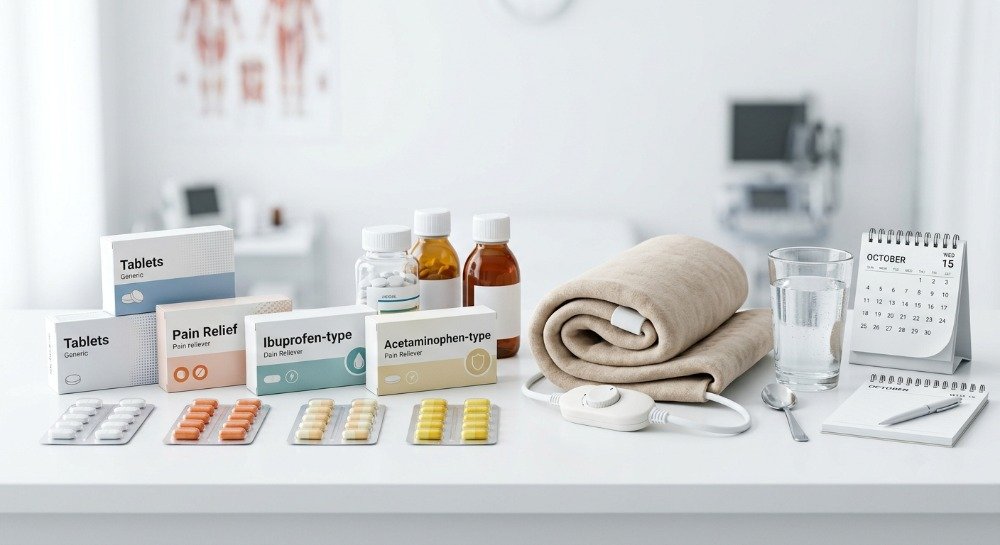
Best OTC Pain Relievers for Menstrual Cramps
Introduction
Menstrual cramps can make everyday life uncomfortable. Some women feel mild pain, while others have cramps that affect work, school, or sleep. Many people look for the best OTC pain relievers for menstrual cramps because they want fast relief without a prescription. The good news is that several over-the-counter medicines can help to reduce pain and make your period more manageable.
This guide explains the most common OTC pain relievers for menstrual cramps, how they work, their benefits, possible side effects, and when medical care may be needed. You’ll also learn simple ways to reduce period pain naturally. The best OTC pain relievers for menstrual cramps can help you stay comfortable during your period.

What are the best OTC pain relievers for menstrual cramps?
The best OTC pain relievers for menstrual cramps include ibuprofen, naproxen sodium, and acetaminophen. NSAIDs such as ibuprofen and naproxen are often the first choice. Because they help to reduce the chemicals that cause menstrual cramps. The right medicine depends on your symptoms, medical history, and overall health.
Why Do Menstrual Cramps Happen?
Menstrual cramps happen when the uterus contracts to help shed its lining during your period. These contractions are caused by natural chemicals called prostaglandins. Higher levels of prostaglandins can lead to stronger cramps. Most cramps improve within the first two or three days of your period.
Can OTC Pain Relievers Help?
Yes. OTC pain relievers are one of the most common treatments for menstrual cramps. Some medicines reduce both pain and inflammation. Others mainly reduce pain. Many women get the best results when they take medicine early, soon after cramps begin. Choosing the best OTC pain relievers for menstrual cramps early may improve pain relief.
Quick Tip: Don’t wait until the pain becomes severe. Taking medicine early may provide better relief.
How to Choose the Right OTC Medicine?
The best medicine depends on several factors. Think about:
- How severe are your cramps?
- How long does the pain last?
- Your age
- Other health conditions
- Any medicines you already take
- Possible side effects
Choosing the right medicine is safer than choosing the strongest one.
When Should You See a Doctor?
Most menstrual cramps improve with home care and OTC medicines. However, you should see a healthcare professional if:
- Pain is severe every month.
- OTC medicine does not help.
- Your periods suddenly become much more painful.
- You have very heavy bleeding.
- Pain continues after your period ends.
- You have a fever or unusual vaginal discharge.
These symptoms may be caused by another medical condition that needs treatment.
How We Chose These OTC Pain Relievers
This guide includes OTC medicines that are widely used for menstrual cramps. Each option was selected based on:
- Medical use for period pain
- Safety when used as directed
- Consumer popularity
- Effectiveness
- Availability in most pharmacies
- Ease of use
Our goal is to help you choose a medicine that matches your symptoms.
What You’ll Learn in This Guide
Finding the best OTC pain relievers for menstrual cramps is easier when you understand how each medicine works. In the next section, we’ll compare the most common OTC pain relievers, explain their benefits, review possible side effects, and help you choose the right option for your needs.

Best OTC Pain Relievers for Menstrual Cramps
The best OTC pain relievers for menstrual cramps depend on how severe your cramps are and how long they last. Some medicines reduce both pain and inflammation, while others mainly relieve pain. Let’s compare the most common OTC options.
1. Ibuprofen (Advil, Motrin IB)
Overview
Ibuprofen is one of the most commonly recommended OTC medicines for menstrual cramps. It belongs to a group of medicines called NSAIDs, which help reduce the prostaglandins that cause uterine cramps.
Many women find that ibuprofen works best when taken as soon as cramping begins.
Key Features
- Reduces pain and inflammation
- Fast-acting
- Available without a prescription
Benefits
- Helps relieve moderate menstrual cramps
- Reduces inflammation
- May improve daily comfort
Possible Side Effects
- Stomach irritation
- Heartburn
- Nausea
Best For
Women with mild to moderate menstrual cramps caused by inflammation.
2. Naproxen Sodium (Aleve)
Overview
Naproxen sodium is another NSAID that provides longer-lasting relief than many other OTC pain relievers.
It may be a good choice if your cramps continue throughout the day.
Key Features
- Long-lasting pain relief
- Reduces inflammation
- Fewer doses may be needed
Benefits
- Helps control ongoing cramps
- Relieves pelvic discomfort
- Convenient dosing
Possible Side Effects
- Stomach upset
- Heartburn
- Nausea
Best For
Women who need longer-lasting relief from menstrual cramps.
3. Acetaminophen (Tylenol)
Overview
Acetaminophen helps relieve pain but does not reduce inflammation. It may be a suitable option for women who cannot take NSAIDs because of certain stomach problems or other medical conditions.
Key Features
- Relieves pain
- Gentle on the stomach
- Easy to find
Benefits
- Helps reduce mild cramps
- Less likely to irritate the stomach
- Available in different forms
Possible Side Effects
- Liver damage if taken in high doses
- Rare allergic reactions
Best For
Women who need pain relief but should avoid NSAIDs.
4. Aspirin
Overview
Aspirin can reduce pain and inflammation, but it is not usually the first choice for menstrual cramps. It may increase bleeding in some women and can irritate the stomach.
For this reason, many healthcare providers recommend other OTC options first.
Key Features
- Reduces pain and inflammation
- Widely available
- Affordable
Benefits
- May help relieve mild pain
- Easy to purchase
- Available in different strengths
Possible Side Effects
- Stomach irritation
- Increased bleeding risk
- Heartburn
Best For
Women who can safely use aspirin after speaking with a healthcare professional.
Quick Comparison of OTC Pain Relievers
| Medicine | Type | Best For | Long-Lasting Relief |
| Ibuprofen (Advil, Motrin IB) | NSAID | Moderate menstrual cramps | ⭐⭐⭐ |
| Naproxen Sodium (Aleve) | NSAID | All-day cramp relief | ⭐⭐⭐⭐ |
| Acetaminophen (Tylenol) | Pain Reliever | Mild cramps | ⭐⭐ |
| Aspirin | NSAID | Mild pain in selected adults | ⭐⭐ |
Compare each option before choosing the best OTC pain relievers for menstrual cramps. Related Article: Best OTC Urinary Tract Infection Medicine for Men
Which Medicine May Be Right for You?
Choosing the best OTC pain relievers for menstrual cramps is easier when you match the medicine to your symptoms.
Mild cramps
Acetaminophen may provide enough relief if your pain is mild and you cannot take NSAIDs.
Moderate cramps
Ibuprofen is often a good choice because it helps reduce both pain and inflammation.
Long-lasting cramps
Naproxen sodium may be a better option if your cramps continue for many hours.
Sensitive stomach
Some women may tolerate acetaminophen better because it is less likely to irritate the stomach. Always follow the directions on the medicine label. If you have ongoing health conditions or take other medicines, ask your healthcare provider before using any OTC pain reliever.
Quick Advice: If your cramps become worse each month or OTC medicines no longer help. Schedule a medical evaluation instead of increasing the dose on your own.
⭐ Which OTC Pain Reliever Works Fastest?
Many women also want to know which medicine starts working the quickest.
Here’s a simple guide:
| Situation | OTC Medicine That May Help |
| Fast relief for moderate cramps | Ibuprofen |
| Longer-lasting relief | Naproxen Sodium |
| Mild pain with a sensitive stomach | Acetaminophen |
| If NSAIDs are not suitable | Acetaminophen (after medical advice if needed) |
Choosing the best OTC pain relievers for menstrual cramps depends on your symptoms, not simply on the strongest medicine.
How to Use OTC Pain Relievers Safely?
OTC pain relievers can help reduce menstrual cramps when they are used correctly. Follow these simple safety tips:
- Read the medicine label before use.
- Take only the recommended dose.
- Do not take more than one NSAID at the same time.
- Drink enough water during your period.
- Take NSAIDs with food if they upset your stomach.
- Do not use pain relievers longer than recommended.
Using medicine safely can help relieve cramps while lowering the risk of side effects. Always use the best OTC pain relievers for menstrual cramps exactly as directed.
Quick Tip: Many women get better results when they take an OTC pain reliever. As soon as cramps begin instead of waiting until the pain becomes severe.
Simple Ways to Reduce Menstrual Cramps Naturally
Medicine is not the only way to feel better. These simple habits may also help reduce menstrual cramps:
- Place a heating pad on your lower abdomen.
- Drink plenty of water.
- Stay physically active with light exercise.
- Stretch gently.
- Eat balanced meals.
- Get enough sleep.
- Limit caffeine if it makes your symptoms worse.
Combining healthy habits with the best OTC pain relievers for menstrual cramps may provide better relief.
When Should You See a Doctor?
Mild to moderate cramps are common. However, severe pain should not be ignored. Talk to a healthcare professional if:
- Your pain is severe every month.
- OTC medicine does not help.
- Your periods become much more painful than before.
- You have very heavy bleeding.
- Pain lasts after your period ends.
- You have a fever or unusual vaginal discharge.
These symptoms may be linked to conditions such as endometriosis, adenomyosis, or uterine fibroids.
Quick Advice: If menstrual pain is affecting your work, school, or daily life every month, it’s time to seek medical advice.
Can You Take OTC Pain Relievers Every Month?
Many women safely use OTC pain relievers during their menstrual cycle. However, they should not be taken more often or in higher doses than recommended. If you need pain medicine every month or your symptoms continue to get worse, speak with your healthcare provider. They can help identify the cause of your cramps and recommend the most appropriate treatment. Many women choose the best OTC pain relievers for menstrual cramps to manage monthly discomfort.
FAQs
What are the best OTC pain relievers for menstrual cramps?
The best OTC pain relievers for menstrual cramps include ibuprofen, naproxen sodium, and acetaminophen. NSAIDs are often the first choice because they reduce both pain and inflammation.
Which OTC medicine works fastest for menstrual cramps?
Ibuprofen usually starts working within about 30 minutes for many women when taken early in the course of menstrual pain.
Is Naproxen better than Ibuprofen?
Both medicines are effective. Naproxen generally lasts longer, while ibuprofen may provide faster relief for some people.
Can I take Acetaminophen for period cramps?
Yes. Acetaminophen may help relieve mild menstrual pain, especially if you cannot take NSAIDs.
When should I stop treating menstrual cramps at home?
See a healthcare professional if your pain becomes severe, keeps getting worse, or OTC medicines no longer provide relief.

Final Thoughts
Finding the best OTC pain relievers for menstrual cramps can make your period more manageable and help you stay comfortable during daily activities. The right medicine depends on your symptoms, medical history, and overall health. OTC pain relievers work best when they are taken correctly and combined with healthy habits such as staying hydrated, using heat therapy, and getting enough rest. The best OTC pain relievers for menstrual cramps should match your symptoms and medical history.
If your menstrual cramps become severe or continue to affect your quality of life, don’t rely on pain medicine alone. A proper medical evaluation can help identify the underlying cause and the most effective treatment. The best OTC pain relievers for menstrual cramps can provide temporary relief, but understanding the cause of your pain is the key to better long-term menstrual health.
Pingback: Best OTC Antifungal Medication for Men