
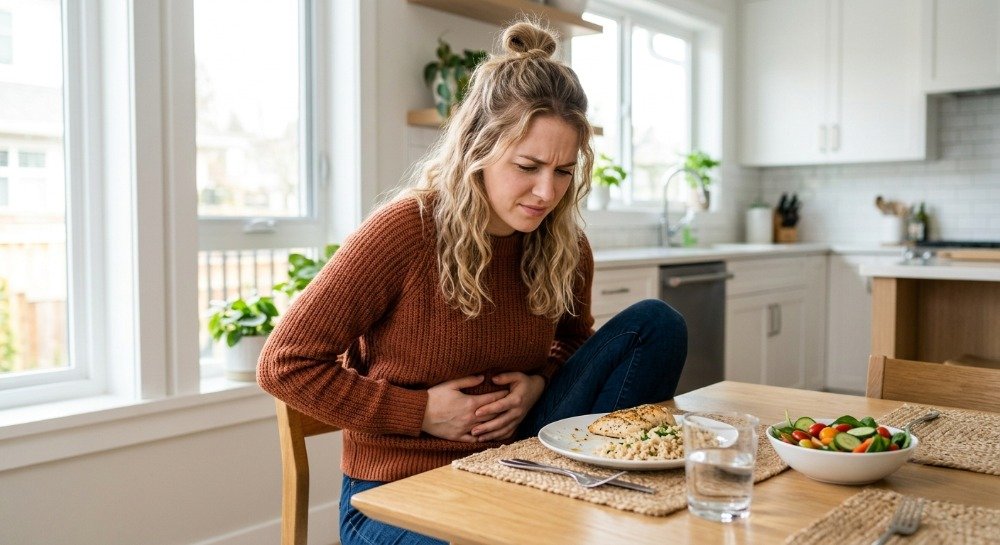
Food poisoning is a foodborne illness caused by eating or drinking contaminated food or beverages. Bacteria, viruses, parasites, or toxins are the most common causes. Symptoms usually include nausea, vomiting, diarrhea, stomach cramps, and fever. Most people recover within a few days, but severe dehydration, bloody diarrhea, high fever, or persistent vomiting require prompt medical attention.
Introduction
Food poisoning can happen when you least expect it. One meal at a restaurant, undercooked meat, spoiled leftovers, or contaminated water can make you feel sick within hours. Symptoms such as nausea, vomiting, diarrhea, stomach cramps, and fever can range from mild to severe. While many people recover at home within a few days, some cases need immediate medical care.
The good news is that most cases of food poisoning improve with proper hydration, rest, and supportive care. Knowing what caused your illness, what to eat, and when to seek medical help can make recovery faster and safer. This complete guide explains everything you need to know about food poisoning symptoms, causes, treatment, home remedies, recovery time, prevention, and warning signs. It also answers the most common questions people search online, helping you make informed decisions for yourself and your family.
What Is Food Poisoning?
Food poisoning is an illness that develops after eating food or drinking liquids contaminated with harmful germs or toxins. These harmful substances can enter food at any stage, including growing, processing, transporting, storing, or preparing meals. Even healthy-looking food may contain bacteria or viruses if it has not been handled safely.
Food poisoning affects millions of people every year around the world. Most cases are mild, but some can become serious, especially in young children, older adults, pregnant women, and people with weakened immune systems. The illness often starts suddenly. You may feel perfectly fine one moment and develop stomach cramps, nausea, or diarrhea just a few hours later. Fortunately, many people recover without complications by staying hydrated and allowing the body time to heal.
How Does Food Poisoning Happen?
Food poisoning occurs when harmful microorganisms or toxins enter your digestive system through contaminated food or drinks. After entering the body, these germs multiply or release toxins that irritate the stomach and intestines. This irritation causes symptoms such as vomiting, diarrhea, abdominal pain, and nausea. The time it takes for symptoms to appear depends on the specific cause. Some people become sick within a few hours, while others may not notice symptoms for several days.
Food Poisoning vs. Stomach Flu
Many people confuse food poisoning with the stomach flu because both conditions affect the digestive system. However, they are not the same illness.
| Food Poisoning | Stomach Flu (Viral Gastroenteritis) |
| Usually caused by contaminated food or drinks | Usually spreads from person to person through viruses |
| Symptoms may begin within hours | Symptoms often develop one to three days after exposure |
| Often linked to a recent meal | Usually linked to contact with an infected person |
| May affect one or several people who ate the same food | Can spread easily within families, schools, or workplaces |
Although the symptoms may look similar, understanding the difference can help identify the likely cause and determine the most appropriate care.
Common Food Poisoning Symptoms
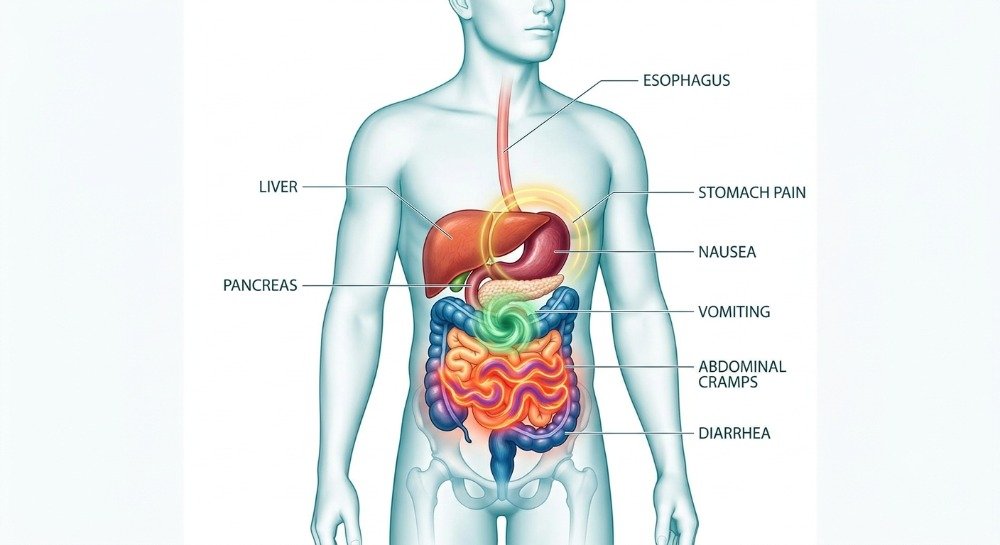
The signs of food poisoning can vary depending on the germ involved and your overall health. Some people experience only mild stomach discomfort, while others develop more severe symptoms. The most common food poisoning symptoms include:
- Nausea
- Vomiting
- Diarrhea
- Stomach cramps
- Abdominal pain
- Loss of appetite
- Fever
- Chills
- Headache
- Weakness
- Fatigue
- Dehydration
Most symptoms begin suddenly and can make normal daily activities difficult. Even after vomiting or diarrhea stops, you may continue feeling tired for a day or two while your body recovers.
Mild vs. Severe Food Poisoning Symptoms
The severity of food poisoning depends on the type of contamination, the amount consumed, and your overall health.
| Mild Symptoms | Severe Symptoms |
| Mild nausea | Persistent vomiting |
| Loose stools | Bloody diarrhea |
| Mild stomach cramps | Severe abdominal pain |
| Mild bloating | High fever |
| Temporary fatigue | Signs of dehydration |
| Reduced appetite | Confusion or dizziness |
| Mild headache | Difficulty keeping fluids down |
Mild symptoms usually improve with rest and hydration. Severe symptoms should never be ignored because they can lead to dehydration and other serious complications.
Signs of Dehydration
One of the biggest concerns with food poisoning is dehydration. Vomiting and diarrhea cause your body to lose water and important electrolytes. Watch for these warning signs:
- Dry mouth
- Extreme thirst
- Dark yellow urine
- Urinating less often
- Dry lips
- Dizziness when standing
- Fast heartbeat
- Feeling unusually weak
- Sunken eyes
Children and older adults can become dehydrated more quickly than healthy adults. Replacing lost fluids early is one of the most important parts of treatment.
Related Article: Gas and Bloating: Causes, Symptoms, Instant Relief, Home Remedies & OTC Medicines
What Causes Food Poisoning?
Food poisoning has many possible causes. Most cases happen after eating food contaminated with bacteria, viruses, parasites, or toxins. Poor food handling, improper cooking, and unsafe storage increase the risk of contamination. Understanding the cause can help you prevent future illness.
1. Bacteria
Bacteria are among the most common causes of food poisoning. They grow rapidly when food is left at unsafe temperatures or handled incorrectly. Common bacteria include:
- Salmonella
- Escherichia coli (E. coli)
- Campylobacter
- Listeria
- Shigella
- Staphylococcus aureus
Different bacteria cause different symptoms and recovery times.
2. Viruses
Viruses are another common cause of foodborne illness. Unlike bacteria, viruses do not multiply in food, but contaminated food handlers or unsafe water can spread them. Common viral causes include:
- Norovirus
- Rotavirus
- Hepatitis A
Norovirus is one of the leading causes of outbreaks in restaurants, schools, cruise ships, and nursing homes.
3. Parasites
Although less common, parasites can also cause food poisoning. Examples include:
- Giardia
- Cryptosporidium
- Toxoplasma
These infections often develop more slowly than bacterial food poisoning and may last longer if untreated.
4. Natural Toxins
Some foods naturally contain toxins that can make people sick. Examples include:
- Certain wild mushrooms
- Improperly prepared seafood
- Fish contaminated with marine toxins
These illnesses may develop quickly and sometimes require emergency medical care.
Foods Most Commonly Linked to Food Poisoning
Almost any food can become contaminated if it is not handled properly. However, some foods carry a higher risk. Common examples include:
- Raw or undercooked chicken
- Raw eggs
- Ground beef
- Seafood
- Raw shellfish
- Unpasteurized milk
- Soft cheeses made from unpasteurized milk
- Deli meats
- Leafy green vegetables
- Sprouts
- Fresh fruits that are not washed properly
- Cooked rice left at room temperature
- Potato salad
- Pasta salad
- Buffet foods kept warm for long periods
Eating these foods does not automatically cause illness. The risk increases when they are contaminated or stored incorrectly.
Who Is Most at Risk?
Anyone can develop food poisoning. However, some people are more likely to become seriously ill. Higher-risk groups include:
- Babies and young children
- Adults over 65 years of age
- Pregnant women
- People with diabetes
- Individuals receiving chemotherapy
- Organ transplant recipients
- People living with HIV
- Anyone with a weakened immune system
These groups may develop complications more easily and should contact a healthcare provider sooner if symptoms appear.
How Quickly Does Food Poisoning Start?
One of the most common questions people ask is:
“How long after eating contaminated food do symptoms begin?”
The answer depends on the germ or toxin involved. Some types of food poisoning cause symptoms within a few hours, while others may take several days.
Food Poisoning Incubation Timeline
| Cause | Symptoms May Begin |
| Staphylococcus toxins | 30 minutes to 8 hours |
| Bacillus cereus | 1 to 6 hours |
| Salmonella | 6 hours to 6 days |
| E. coli | 1 to 10 days |
| Campylobacter | 2 to 5 days |
| Listeria | A few days to several weeks |
| Norovirus | 12 to 48 hours |
Because symptoms can appear at different times, the last meal you ate is not always the one responsible for your illness. Looking back over the previous few days often provides a more accurate picture.
How Long Does Food Poisoning Last?
The recovery time depends on the cause of the infection and your overall health. Most mild cases improve within 24 to 72 hours, while others may take a week or longer. Many people begin feeling better once vomiting stops and they can keep fluids down. However, fatigue and reduced appetite may continue for several days as the digestive system heals.
General Recovery Timeline
| Severity | Typical Recovery Time |
| Mild food poisoning | 1–3 days |
| Moderate food poisoning | 3–7 days |
| Severe food poisoning | One week or longer, depending on the cause |
Rest, hydration, and eating gentle foods can help support recovery.
How to Treat Food Poisoning at Home?
Most cases of food poisoning improve without prescription medicine. The main goal is to prevent dehydration, allow your stomach to recover, and gradually return to normal eating. The first 24 to 48 hours are usually the most uncomfortable. During this time, focus on replacing lost fluids and resting as much as possible. Simple home care is often enough for mild food poisoning. However, if your symptoms become severe or continue to worsen, seek medical care instead of trying to manage everything at home.
The First 24 Hours: What Should You Do?
If you think you have food poisoning, do not panic. Take the following steps to help your body recover.
Step 1: Stay Hydrated
Vomiting and diarrhea quickly remove water and important minerals from your body. Take small sips of fluids every few minutes instead of drinking large amounts at once. Good choices include:
- Plain water
- Oral Rehydration Solution (ORS)
- Clear broth
- Coconut water (if tolerated)
- Ice chips if drinking is difficult
If you vomit, wait about 15 to 20 minutes before trying small sips again.
Step 2: Rest Your Body
Your immune system is working hard to fight the infection. Avoid strenuous activity. Get plenty of sleep and allow your body time to recover.
Step 3: Eat Slowly
Do not force yourself to eat if you feel nauseated. Once vomiting begins to improve, start with small portions of easy-to-digest foods. Eating too much too soon may trigger nausea again.
Step 4: Avoid Alcohol and Smoking
Alcohol may worsen dehydration. Smoking may irritate the stomach and increase nausea in some people. Avoid both until you have fully recovered.
How to Prevent Dehydration
Dehydration is one of the most common complications of food poisoning. It happens because your body loses fluids through vomiting and diarrhea faster than they can be replaced. The earlier you begin replacing fluids, the lower your risk of complications.
Signs You Are Staying Well Hydrated
- Your mouth feels moist.
- Your urine is light yellow.
- You urinate regularly.
- Your dizziness improves.
- You have more energy.
Signs That Dehydration Is Getting Worse
- Very dark urine
- Dry mouth
- Extreme thirst
- Sunken eyes
- Fast heartbeat
- Little or no urination
- Feeling faint when standing
These symptoms require prompt medical attention, especially in children and older adults.
Oral Rehydration Solution (ORS): Why It Matters
Many people believe that drinking plain water is enough after food poisoning. While water is important, it does not replace the electrolytes lost through vomiting and diarrhea. An Oral Rehydration Solution (ORS) contains the right balance of:
- Sodium
- Potassium
- Glucose
- Water
These ingredients help your body absorb fluids more effectively. ORS is often the best choice if diarrhea or vomiting continues for several hours. Commercial ORS products are widely available, and they are especially useful for children, older adults, and anyone showing signs of dehydration.
Related Guide: Benefits of Ginger
What to Eat After Food Poisoning?
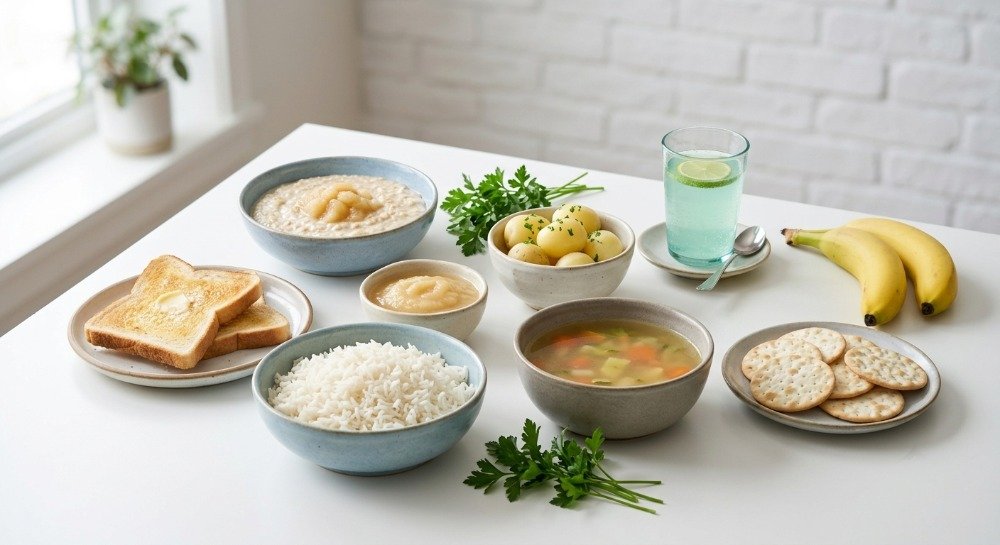
Your stomach and intestines need time to recover. Choosing gentle foods can reduce irritation while helping your body regain strength. Begin with small portions and eat slowly. If a food worsens your symptoms, stop eating it and try again later.
Best Foods to Eat During Recovery
1. Bananas
Bananas are soft, easy to digest, and rich in potassium. They help replace electrolytes lost through diarrhea and vomiting.
2. Plain Rice
White rice is gentle on the stomach. It is easy to digest and may help firm loose stools.
3. Applesauce
Applesauce is easier to digest than whole apples. It provides carbohydrates for energy while being gentle on the stomach.
4. Toast or Plain Crackers
Dry toast and plain crackers are simple foods that many people tolerate well during recovery. They are a good option if your appetite is limited.
5. Oatmeal
Cooked oatmeal is soft, filling, and easy to digest. Choose plain oatmeal without added sugar or heavy toppings.
6. Boiled Potatoes
Plain boiled potatoes provide carbohydrates and potassium without irritating the digestive system. Avoid butter or spicy seasonings until you feel better.
7. Clear Soups
Chicken broth or vegetable broth helps replace fluids while providing small amounts of nutrients. Warm broth may also feel soothing if you have nausea.
8. Lean Chicken
Once your appetite improves, skinless boiled or baked chicken provides protein without excessive fat. Avoid fried chicken during recovery.
9. Yogurt with Live Cultures
Some people tolerate yogurt with probiotics after diarrhea begins to improve. Beneficial bacteria may help restore the balance of healthy gut microbes. If dairy worsens your symptoms, wait until your stomach has fully recovered.
Related Guide: Healthy Fast Food Options: Best Choices for a Balanced Diet
Recovery Diet Timeline
| Recovery Stage | Recommended Foods |
| First few hours | Water, ORS, ice chips, clear broth |
| After vomiting improves | Bananas, rice, applesauce, toast, crackers |
| Next 24–48 hours | Oatmeal, potatoes, soup, lean chicken |
| As symptoms resolve | Return gradually to a balanced, healthy diet |
Foods to Avoid After Food Poisoning
Your digestive system remains sensitive for several days after food poisoning. Certain foods may worsen nausea, diarrhea, or stomach cramps. It is best to avoid them until you feel completely better.
1. Fried Foods
High-fat foods slow digestion and may increase stomach discomfort.
2. Spicy Foods
Spicy meals can irritate the stomach lining and worsen diarrhea.
3. Alcohol
Alcohol contributes to dehydration and may delay recovery.
4. Coffee and Energy Drinks
Caffeine may increase bowel activity and worsen dehydration in some people. Wait until you have recovered before drinking caffeinated beverages again.
5. Sugary Drinks
Large amounts of sugar can sometimes worsen diarrhea. Choose water or ORS instead.
6. Dairy Products
Some people temporarily develop difficulty digesting lactose after food poisoning. Milk, cream, and ice cream may increase bloating or diarrhea until the gut heals.
7. Raw Vegetables
Although healthy, raw vegetables contain fiber that may be difficult to digest during recovery. Cooked vegetables are often better tolerated at first.
8. Highly Processed Foods
Foods that are heavily processed or high in fat may place additional stress on your digestive system. Choose simple, freshly prepared meals instead.
Foods to Eat vs. Foods to Avoid
| Foods That Help Recovery | Foods to Avoid |
| Bananas | Fried foods |
| White rice | Spicy meals |
| Applesauce | Alcohol |
| Toast | Coffee |
| Plain crackers | Energy drinks |
| Oatmeal | Sugary drinks |
| Clear broth | Dairy (if symptoms worsen) |
| Boiled potatoes | Raw vegetables |
| Lean chicken | Highly processed foods |
Best OTC Medicines for Food Poisoning
Over-the-counter (OTC) medicines may help relieve certain symptoms, but they do not cure food poisoning. The best option depends on your symptoms and the underlying cause. Some medicines are helpful, while others should be avoided in specific situations.
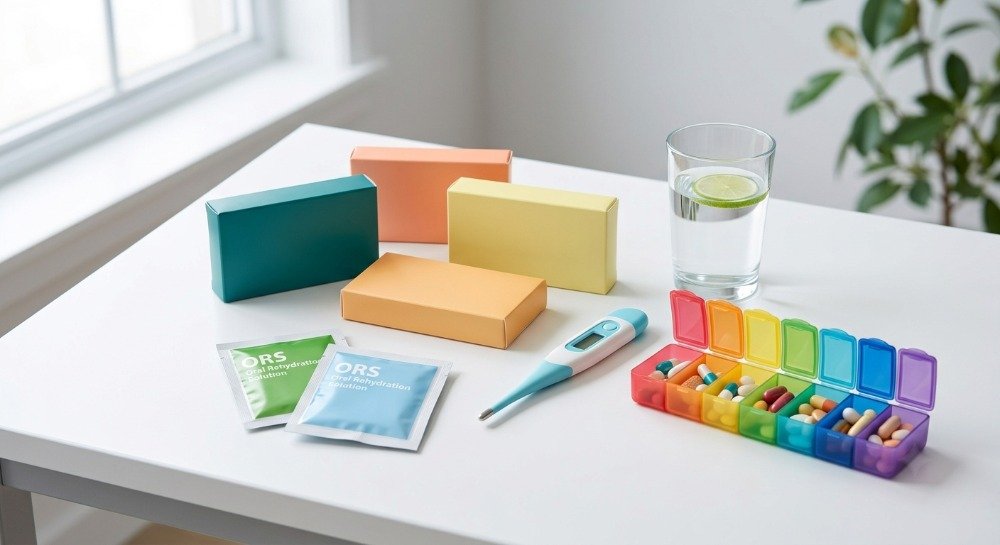
1. Oral Rehydration Solution (ORS)
Best for: Preventing and treating dehydration
ORS replaces both fluids and electrolytes lost through vomiting and diarrhea. It is one of the most important treatments for food poisoning.
2. Bismuth Subsalicylate
Best for: Mild nausea, diarrhea, and stomach upset
This medicine may help reduce diarrhea and calm an upset stomach. It is not appropriate for everyone, including some children and people with certain medical conditions. Always follow the product label or ask a healthcare professional if you are unsure.
3. Loperamide
Best for: Certain cases of diarrhea
Loperamide can reduce diarrhea, but it is not recommended if you have:
- Bloody diarrhea
- High fever
- Suspected bacterial infection causing severe illness
In these situations, slowing the movement of the intestines may not be appropriate. If you are unsure, seek medical advice before using it.
4. Pain Relievers
If you develop fever or body aches, some over-the-counter pain relievers may help. Use them only as directed and avoid exceeding the recommended dose. If severe abdominal pain is present, seek medical evaluation rather than masking the pain with medication.
Worth reading guide: Best OTC Medicines
OTC Medicine Comparison
| Medicine | Best For | Important Note |
| ORS | Dehydration | Replaces fluids and electrolytes |
| Bismuth Subsalicylate | Mild nausea and diarrhea | Follow label directions and precautions |
| Loperamide | Certain cases of diarrhea | Avoid if fever or bloody diarrhea is present |
| Pain Relievers | Fever and body aches | Do not exceed recommended doses |
Do Antibiotics Help Food Poisoning?
Many people think antibiotics are the quickest way to recover from food poisoning. This is not always true. Antibiotics only work against certain bacterial infections. They do not treat illnesses caused by viruses, and they are not needed for most mild cases of food poisoning. Using antibiotics when they are not necessary can increase the risk of side effects and contribute to antibiotic resistance. A healthcare provider may prescribe antibiotics only when they are clearly indicated based on your symptoms, medical history, or test results. Never take leftover antibiotics or someone else’s prescription.
Food Poisoning During Pregnancy
Pregnant women should take food poisoning seriously because some infections can affect both the mother and the developing baby. If you are pregnant and develop vomiting, diarrhea, fever, or severe stomach pain, contact your healthcare provider promptly. Stay hydrated and avoid taking medicines unless they have been recommended by your doctor. Preventing food poisoning during pregnancy is especially important. Avoid:
- Raw seafood
- Unpasteurized dairy products
- Undercooked meat
- Refrigerated smoked seafood unless properly heated
Food Poisoning in Children
Children can become dehydrated much faster than adults. Offer small, frequent sips of ORS if recommended by a healthcare professional. Watch for signs such as:
- Dry mouth
- No tears when crying
- Fewer wet diapers
- Unusual sleepiness
- Sunken eyes
Seek medical care immediately if your child cannot keep fluids down, has persistent vomiting, bloody diarrhea, or appears unusually drowsy.
Food Poisoning in Older Adults
Older adults are more likely to develop dehydration and complications. Even mild diarrhea or vomiting can quickly lead to weakness, dizziness, or low blood pressure. Drink fluids regularly and seek medical advice early if symptoms do not improve or if dehydration develops. People with chronic medical conditions should be especially cautious.
Quick Recovery Checklist
✔ Drink ORS or water regularly.
✔ Rest as much as possible.
✔ Eat small amounts of easy-to-digest foods.
✔ Avoid fried, spicy, and fatty meals.
✔ Do not take antibiotics unless prescribed.
✔ Use OTC medicines only when appropriate.
✔ Monitor for signs of dehydration.
✔ Seek medical care if symptoms become severe or do not improve.
How to Prevent Food Poisoning?
The best treatment for food poisoning is prevention. Simple food safety habits can greatly reduce your risk of getting sick. Whether you are cooking at home, eating out, or traveling, following a few basic rules can help protect you and your family. Food poisoning is often preventable. Paying attention to how food is prepared, cooked, and stored makes a big difference.

1. Wash Your Hands Properly
Clean hands are one of the easiest ways to stop the spread of harmful germs. Wash your hands with soap and clean running water for at least 20 seconds:
- Before preparing food
- Before eating
- After using the bathroom
- After changing diapers
- After handling raw meat, poultry, or seafood
- After touching pets
- After taking out the trash
Handwashing is especially important when preparing meals for children, older adults, or people with weakened immune systems.
2. Cook Food to Safe Temperatures
Undercooked food can contain dangerous bacteria that survive the cooking process. Use a food thermometer whenever possible instead of guessing. Pay special attention to:
- Chicken
- Turkey
- Ground beef
- Pork
- Seafood
Proper cooking kills many harmful germs and makes food much safer to eat.
3. Store Food Correctly
Many bacteria grow quickly at room temperature. Do not leave cooked food sitting out for more than two hours. In hot weather, refrigerate it within one hour. Store leftovers in clean, airtight containers and refrigerate them promptly. When reheating leftovers, make sure they are heated thoroughly before eating.
4. Avoid Cross-Contamination
Raw meat, poultry, seafood, and eggs can spread bacteria to other foods. Keep them separate from foods that are ready to eat. Use different cutting boards and knives for raw meat and fresh produce whenever possible. Wash kitchen surfaces and utensils with hot, soapy water after preparing raw foods.
5. Wash Fresh Fruits and Vegetables
Fresh produce can carry dirt, bacteria, and pesticides. Rinse fruits and vegetables under clean running water before eating or cooking them. Even produce with peels, such as melons or oranges, should be washed before cutting.
6. Check Expiration Dates
Never ignore expiration or “use by” dates. Throw away food that smells unusual, has changed color, or shows signs of spoilage. If you are unsure whether a food is safe, it is better to throw it away than risk getting sick.
7. Be Careful When Eating Out
Most restaurant meals are safe, but food poisoning can happen anywhere. Choose restaurants that appear clean and follow good hygiene practices. Avoid:
- Raw or undercooked meat
- Raw shellfish
- Food sitting at room temperature for long periods
- Buffets where hot foods are no longer hot or cold foods are no longer cold
Trust your instincts. If something looks or smells wrong, do not eat it.
8. Food Safety While Traveling
Traveling can increase your risk of food poisoning, especially in places with different food safety standards. To lower your risk:
- Drink bottled or treated water if local water safety is uncertain.
- Avoid ice unless you know it was made with safe water.
- Eat food that is freshly cooked and served hot.
- Peel fruits yourself when possible.
- Avoid raw seafood and unpasteurized dairy products.
Taking a few precautions can help you enjoy your trip without digestive problems.
9. Food Poisoning Recovery Timeline
Recovery depends on the cause of the illness, your age, and your overall health. Most healthy adults recover completely within a few days.
Typical Recovery Timeline
| Time | What You May Experience |
| First 24 hours | Nausea, vomiting, diarrhea, stomach cramps |
| Days 2–3 | Vomiting usually improves, diarrhea may continue |
| Days 3–5 | Energy slowly returns, appetite improves |
| Within 1 week | Most people recover completely |
| More than 1 week | Persistent symptoms should be evaluated by a healthcare provider |
Recovery times vary. Some bacterial or parasitic infections may last longer and require medical treatment.
When Should You See a Doctor?
Many cases of food poisoning improve with home care. However, some symptoms should never be ignored. Seek medical attention if you have:
- Bloody diarrhea
- Persistent vomiting that prevents you from keeping fluids down
- Signs of severe dehydration
- A fever higher than 102°F (38.9°C)
- Severe or worsening abdominal pain
- Diarrhea lasting more than three days in adults
- Symptoms that continue to worsen instead of improving
Pregnant women, infants, older adults, and people with weakened immune systems should contact a healthcare provider sooner because they have a higher risk of complications.
When Is It an Emergency?
Go to the nearest emergency department or seek urgent medical care if you experience:
- Confusion or difficulty waking up
- Trouble breathing
- Severe dehydration with little or no urination
- Fainting
- Persistent bloody vomiting
- Severe abdominal swelling
- Seizures
These symptoms may indicate a serious illness that needs immediate treatment.
Home Care vs. Medical Care
| Home Care Is Usually Enough | Seek Medical Care |
| Mild diarrhea | Bloody diarrhea |
| Mild nausea | Persistent vomiting |
| Mild stomach cramps | Severe abdominal pain |
| Able to drink fluids | Unable to keep fluids down |
| Symptoms improving | Symptoms getting worse |
| No dehydration | Signs of dehydration |
This simple comparison can help you decide when it is safe to recover at home and when professional care is needed.
Related Guide: Heart Healthy Diet for High Blood Pressure: Best Foods & Meal Plan
Common Myths About Food Poisoning
Many myths about food poisoning continue to spread online. Knowing the facts can help you recover safely.
Myth: You should stop drinking water if you are vomiting.
Fact: Small, frequent sips of water or ORS help prevent dehydration. Avoid drinking large amounts at one time.
Myth: Antibiotics cure every case of food poisoning.
Fact: Most cases do not require antibiotics. They only work against certain bacterial infections and should only be used when prescribed.
Myth: If symptoms improve, you can immediately eat anything.
Fact: Your digestive system needs time to recover. Gradually return to your normal diet.
Myth: Food that smells normal is always safe to eat.
Fact: Harmful bacteria often do not change the smell, taste, or appearance of food.
Myth: Food poisoning always begins immediately after eating.
Fact: Symptoms may appear within hours or may take several days, depending on the cause.
Frequently Asked Questions
How do I know if I have food poisoning?
Food poisoning usually causes sudden nausea, vomiting, diarrhea, stomach cramps, or fever after eating contaminated food. Symptoms can begin within hours or several days, depending on the type of infection.
How long does food poisoning usually last?
Most mild cases improve within one to three days. Moderate cases may last up to a week. Recovery depends on the cause and your overall health.
Is food poisoning contagious?
Food poisoning itself is not always contagious. However, some viruses that cause foodborne illness, such as norovirus, can spread from person to person through close contact or poor hand hygiene.
What is the fastest way to recover from food poisoning?
The best approach is to stay hydrated, rest, replace lost electrolytes with an oral rehydration solution if needed, and slowly return to eating gentle, easy-to-digest foods as your symptoms improve.
Can food poisoning go away without medicine?
Yes. Many mild cases improve without prescription medicines. Home care, fluids, and rest are often enough for healthy adults.
Should I stop eating if I have food poisoning?
If you are vomiting, wait until it settles before eating. Once you can tolerate fluids, start with small amounts of bland foods and gradually return to your normal diet.
Can probiotics help after food poisoning?
Some people may benefit from probiotics after the acute illness has improved, as they can help restore the balance of healthy gut bacteria. However, they are not a replacement for proper hydration or medical treatment when needed.
Can I go to work or school with food poisoning?
No. Stay home until your vomiting has stopped and diarrhea has resolved. This helps protect others and gives your body time to recover. Follow local public health guidance or your employer’s policies before returning.
Is it normal to feel tired after food poisoning?
Yes. Fatigue is common because your body has been fighting an infection and recovering from fluid loss. Energy usually returns gradually over the next few days.
Can food poisoning be prevented?
In many cases, yes. Proper handwashing, safe food handling, correct cooking temperatures, and proper food storage greatly reduce the risk.
Key Takeaways
- Food poisoning is usually caused by contaminated food or drinks.
- Symptoms often include nausea, vomiting, diarrhea, stomach cramps, and fever.
- Staying hydrated is the most important part of treatment.
- Eat bland, easy-to-digest foods as your appetite returns.
- Avoid fried, spicy, and high-fat foods during recovery.
- Antibiotics are not needed for most cases.
- Watch for signs of dehydration and seek medical care if symptoms become severe.
- Safe food handling is the best way to prevent future illness.
Conclusion
Food poisoning can be unpleasant, but most people recover fully with rest, hydration, and supportive care. Understanding the symptoms, common causes, and the right treatment can help you recover safely while reducing the risk of complications. The most important step is to replace lost fluids and listen to your body.
Start with clear liquids, eat gentle foods as your appetite returns, and avoid anything that irritates your stomach. If your symptoms become severe, last longer than expected, or you notice signs of dehydration, seek medical care without delay. By following good food safety habits at home and when eating out, you can lower your risk of future food poisoning and protect the health of your entire family.